HOA Detective™ | April 3, 2026: In 1974, a Newport Beach architect gave a young HOA Detective™ a piece of advice that would shape the next fifty years of my professional life. I had told him I planned to study architecture shortly after I graduated from high school. He looked at me and said, “Before you spend five years studying building in books, go learn how to build one.”
I respected his opinion. So I did exactly that.
Instead of heading straight into an academic program, I entered the trades. Within a few years, I found myself deep into a carpenter’s union apprenticeship in Fort Worth, Texas. It was a hands-on education in how buildings are put together – materials, labor, assembly sequencing, cost control, and, most importantly, risk management.
By the winter of 1978, I had “journeyed out” and was working on a crew of a commercial building project. During my apprenticeship, I became friends with a slightly older apprentice, who was operating on a very different trajectory. His path into construction was not through tools and trade mastery, but through capital and opportunity. Bob’s father-in-law owned a prominent construction company in North Texas and had staked him in the homebuilding business.
By the time Bob exited the union apprenticeship program, he wasn’t swinging a hammer. He was building houses with a briefcase and a checkbook!
The business model Bob described to me was, in hindsight, a snapshot of a system that no longer exists.
In Bob’s words, to build a house in North Texas in the late 1970s, you only needed four things:
1. A briefcase.
2. A pickup truck.
3. A set of permitted plans, and
4. Money.
Stock house plans worked just fine. $100 bucks for five copies of permit-ready plans, ready for pick-up from the printer the day after you placed the order.
This was the formula my father (Henry P. Horton, the Oracle of Engineering) later described as the “briefcase builder.”
My soon-to-be partner in the building business, christened Bob a “leisure suit builder,” an ode to the 1970’s double-knit garb Bob was often seen wearing.
Permits could be pulled in days by a briefcase/leisure suit builder – sometimes in a single afternoon. Once the permit was issued, construction took about 90-100 days from start to finish to build a house.
“Turn-key” Meant Exactly That: A home ready for a buyer to stick the key in the front door lock, turn the key, and move in.
The Pickup Truck? As it turned out, this was only for ambiance – as Bob explained one evening while we nursed our beers at the waterhole near the union hall:
“You gotta wheel up on the construction site in a pickup, otherwise nobody is going to respect you!”
The Economics of Housing were Straightforward: A typical Briefcase Bob home might sell for $120K-$125K. Add a swimming pool, or a premium lot, and you might push the price toward $150,000.
An organized briefcase builder could earn 10 to 15 percent of the selling price of a house after the construction loan was paid, the real estate commission, and assorted “soft costs” were subtracted from the proceeds.
Build 10 to 20 houses a year and you were talking about a very respectiable annual income stream for the 1950-70s era in which the Briefcase Bobs of the world were building one our of five homes in the U.S.
That’s if everything went as planned. If it didn’t, you were “working for wages.” An outcome not as bad as losing the entire building project to the bank, if you didn’t sell the homes, and couldn’t pay the interest on the construction loan, but clearly working for wages was not the intended goal.
That was the new home building business model half a century ago, when briefcase builders were force in the market.
Briefcase Bob started out building five to six homes at a time. Eventually ramping up his annual production to as many as twenty homes. At ~$12-15,000 before tax profit per house, he was doing quite well – especially for someone who didn’t need a tool belt to make a living.
Inspired by the success of Briefcase Bob, the future HOA Detective decided to embark on a home-building venture with a partner shortly after we both completed our apprenticeships. By December of 1980, when the prime rate topped out at 20.5%, my partner and I were on the hook for a $250K construction loan at 2% over prime – do the math.
Suffice it to say, a 20.5% prime rate, followed by a decade-long S&L scandal, was enough to take out 98% of the briefcase builders in the U.S. including the Detective’s fledging attempt at becoming a briefcase builder.
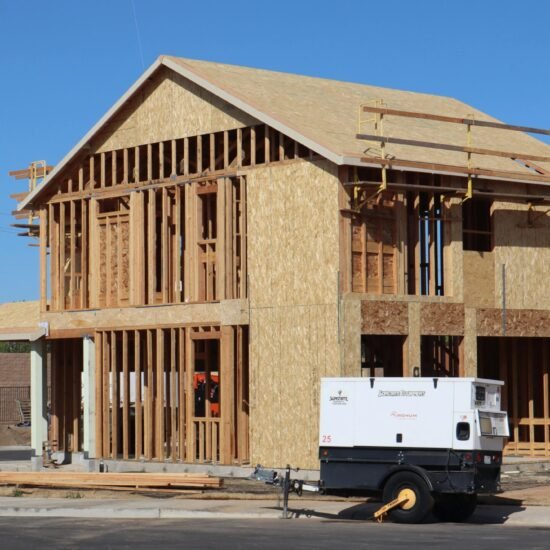
Fast-forward to 2026: The same house Briefcase Bob was building in the late 1970s now requires thousands of dollars in upfront design, engineering, and permitting costs before a shovel ever touches the ground. In the time a new home project to be permitted today, Briefcase Bob could have built and sold an entire six-house portfolio of new homes.
Give Bob a year, and he would have built 20-25 new homes. Not flimsy starter homes, executive quality homes with amenities most buyers can only dream about today.
In some regions of the country, the permit process alone can take a year or more, not months. In many jurisdictions, it involves multiple layers of review, revision cycles, and compliance requirements that did not exist in the 1970s.
As far back as 1996, a new home permit issued by the city of Portland, OR required that the project had to be reviewed and approved by no less than thirteen different departments within the city permitting labyrinth. Depending on where the project was located, the state Dept of Environmental Quality DEQ) may have to approve the project: more fees, more time for approval – all while the interest meter is running.
Construction timelines have doubled, and in some cases tripled, since brief-case Bob’s days. What was once a 90 – 120-day build is now commonly an 8 –12-month process, if everything goes as planned. If they don’t, you can be on the job for more than a year, in no time at all. By the time you escape the project, you are working for FREE, assuming you sell the house before the lender takes it.
The modern builder is dependent on, and disrupted by:
- Labor availability.
- Friction-free inspections.
- Uninterrupted supply chains.
- An overbearing regulatory framework that can involve city, county, regional, and state officials.
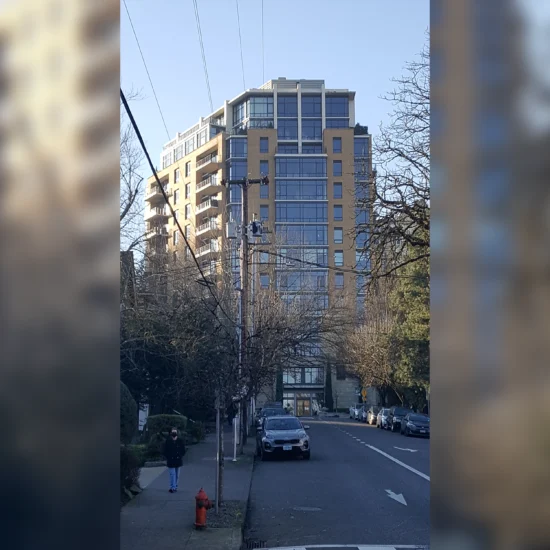
2026 Housing Development: Today, a significant portion of new housing is located within a common-interest development (CID) framework. Planned communities, condominiums, and townhome developments dominate new supply in many markets. The modern housing development is not a simple matter of building homes, as Briefcase Bob did 50 years ago.
The 2026 housing development requires the developer to create a governance system, along with the traditional building activities associated with the home-building process. Local governments, for their part, are encouraging this shift as it allows the infrastructure development and maintenance costs to be offloaded to privatized interests, either the developer or the homeowner association created by the developer at the behest of local authorities.
The days of Briefcase Bob are gone!
Also gone is the opportunity to buy a home that only costs 2X your annual salary.
Also gone, in most parts of the country, is the ability to buy a new home that is NOT located in a common interest development (HOA).
Also gone, in many instances, is the ability to own any type of new home located on your own lot, and is NOT attached to your neighbor’s home.
So, if you are old enough to remember the days of Briefcase Bob, or lucky enough to own a home built by “Bob,” go home and raise a toast to all the Briefcase Builders of Yesteryear.
Because You’re buying More than a Home!