The HOA Detective™ | March 17, 2026: The headlines at The Oregonian have been warning about plunging condominium prices in Portland, suggesting that the downturn represents a rare opportunity for first‑time buyers. Lower prices and more inventory, the story goes, might finally allow younger households to enter the housing market.
But there is a deeper story behind the numbers – one that many market observers overlook.
What appears to be a bargain may instead be the early stage of a structural repricing of aging condominium buildings. The reason lies not in interest rates or temporary economic cycles, but in the financial lifecycle of homeowner associations.
For more than a decade, CIDAnalytics has examined this lifecycle through the lens of the CIDA REPORT™ framework. The pattern that emerges repeatedly across the country – and particularly in cities like Portland – is what we call the “HOA Tipping Point.”
In condominium buildings, infrastructure does not age gracefully from a financial standpoint. Mechanical systems, building envelopes, elevators, roofs, and plumbing components are all engineered with finite lifespans. When a building reaches roughly twenty years of age, many of those systems begin approaching replacement simultaneously.
Long-term Financial Implications are Enormous: Elevator modernizations can reach hundreds of thousands of dollars. Roof replacements routinely exceed one or two million dollars in larger buildings. Parking garages may require structural waterproofing. Mechanical systems may require complete replacement.
The problem is not that these projects exist – they are expected in any building lifecycle. The problem is that many associations have not adequately saved for them.
During the early years of a condominium development, homeowners’ dues are often artificially low. Developers keep assessments minimal to attract buyers. For the first decade or two, the strategy appears to work. Major repairs are rare, maintenance costs remain modest, and the financial pressure on owners stays low.
But as buildings reach the twenty‑year threshold, they are confronted with the HOA Tipping Point. Suddenly, the math changes quickly. Reserve funds that once seemed adequate suddenly prove insufficient when major capital expenditures arrive. Boards are then forced to raise dues, levy special assessments, or defer maintenance. None of those outcomes is attractive to buyers or owners.
This is where the HOA Tipping point begins to affect property values. As maintenance costs rise, monthly HOA dues increase. Higher dues reduce affordability. Reduced affordability weakens demand. When units take longer to sell, prices begin to soften.
Eventually, a Feedback Loop Emerges: Rising costs push prices down. Lower prices attract investors rather than long‑term residents. Investors may resist additional capital spending because they prioritize short‑term cash flow. Deferred maintenance then worsens the building’s condition, reinforcing the downward financial trajectory.
This cycle does not occur in every association, but it appears frequently enough to shape entire local markets when large numbers of buildings age at the same time.
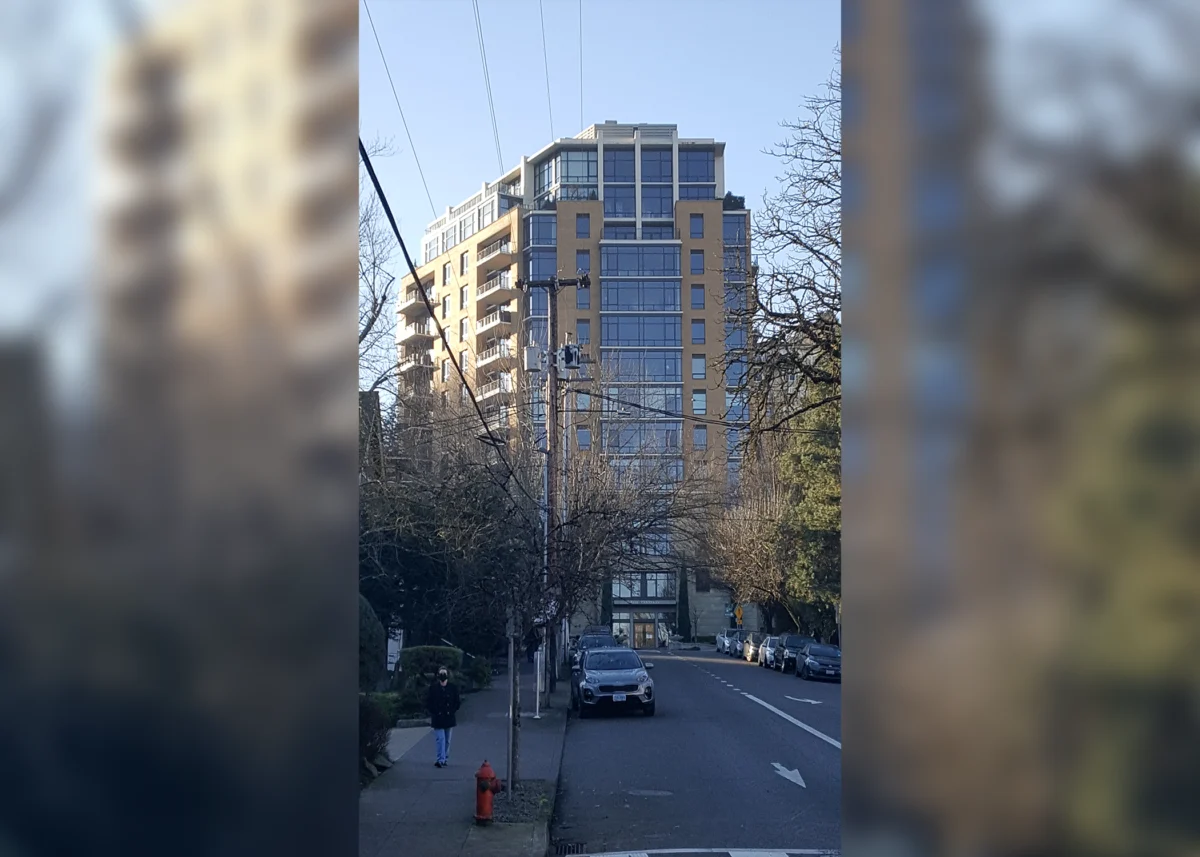
Portland is approaching precisely that moment, especially in the downtown core neighborhoods and the South Waterfront. Many condominium buildings in this area were constructed between the late 1990s and the mid‑2000s. As those structures approach the twenty‑to‑thirty‑year range, they begin encountering the same wave of infrastructure renewal.
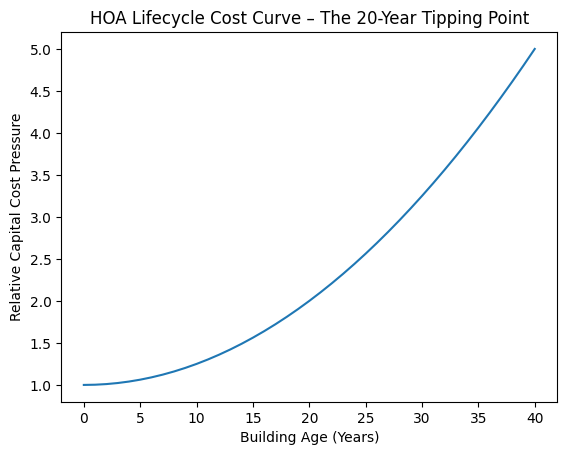
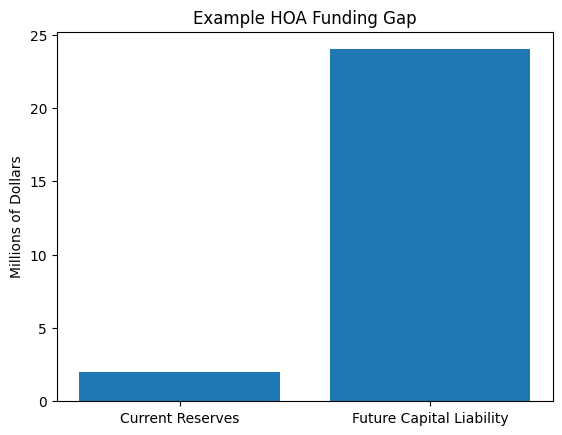
The charts below illustrate two critical concepts.
First, lifecycle cost pressure accelerates sharply after roughly twenty years of building age.
Second, the gap between existing reserves and future capital obligations can become extremely large if funding has been insufficient for long periods.
Consider the Westerly Example: A condominium building with 104 residential units, like the Westerly, will likely be faced with ~$26 million in capital replacement costs over the next three decades. Possibly more, but the recent reserve study for the property suggests $26 million is the number. If the Association currently holds ~$2 million in reserves, the remaining liability must ultimately be funded by the late-generation owners, that includes our first-time buyer in 2026 who is shopping for a “housing bargain” in Portland.
Spread across 104 units, that represents roughly $231,000 in future capital obligations per owner.
If a unit in that building sells today for $450,000, the effective economic value of the asset changes dramatically when the infrastructure liability is considered. Is the current value really $450K or should the price be discounted by some percentage of the future reserve spending liability?
Most buyers never see this calculation.
Traditional real‑estate analysis tends to focus on macroeconomic forces such as mortgage rates, job growth, and migration patterns. While those factors certainly influence demand, they do not reflect the financial condition of the HOA itself.
The CIDA REPORT™ approach looks deeper. Looking at metrics such as:
- Reserve funding levels;
- Deferred maintenance exposure;
- Special‑assessment history;
- Delinquency rates;
- Litigation risk;
- Association borrowing habits/current debt levels;
- Insurance/risk management.
These systemic indicators reveal whether a condominium building is financially healthy or quietly approaching crisis. For first‑time buyers, this distinction matters enormously. Unlike single‑family homeowners, condominium owners cannot choose the timing of major repairs. If a board votes to replace the roof or rebuild a parking structure, every owner must contribute their share immediately.
In underfunded associations, that obligation may arrive as a special assessment of tens of thousands of dollars.
This reality is often invisible in the listing price.
Conclusion: The falling condo prices now appearing in Portland may represent something more significant than a “cyclical slowdown.” They may reflect the early stages of a broader market realization: aging buildings with underfunded reserves carry hidden liabilities that buyers are beginning to recognize. In this context, the “plunge” may not be a sale at all. It may simply be the market discovering the true cost of owning a condominium in an Association with aging infrastructure.
Visual Aid 1: HOA Lifecycle Cost Curve
Visual Aid 2: Example Reserve Funding Gap
Source Citation
1. Jonathan Bach et al |“Portland Condo Prices Are Sinking. What it means for owners and first‑time homebuyers,” OregonLive / The Oregonian, March 2026.
Because You’re Buying More than a Home!