Inside the Reserve Study Industry
HOA Detective™ | May 12, 2026: This essay is Part 4 of a broader series titled “Fixing the Imperfect Machine,” which examines the structural, financial, and governance failures embedded within modern homeowner associations (HOAs).
Each installment isolates a critical subsystem – governance, operations, finance – and evaluates how misaligned incentives and opaque practices degrade long-term stability of common interest developments (CIDs) of many common interest developments (CIDs). This situation is becoming a more prevalent concern of both early-generation owners and the late-generation buyers who stand to inherit the problems caused by a financially unstable HOA.
The reserve study industry presents itself as a discipline rooted in engineering rigor, actuarial foresight, and mathematical precision. Boards rely on reserve studies to predict future capital expenses, lenders use them to assess financial stability, and buyers increasingly interpret them as proxies for risk. Yet beneath the polished spreadsheets and color-coded funding plans lies an uncomfortable reality: much of the industry is built on inconsistent assumptions, weak standardization, and structural flaws.
In Part 4 of Fixing the Imperfect Machine, we will dismantle the reserve study process in an effort to identify the “broken” elements of the reserve study “machine.”
Public Perception vs. Reality: The public is often told that a reserve study is a “30-year financial roadmap” for a homeowner association. In practice, many reserve studies are little more than snapshot estimates combined with simplistic inflation assumptions and static deterioration models. They frequently fail to account for accelerating construction fatigue, changing insurance realities, deferred maintenance dynamics, labor volatility, climate risk, or behavioral distortions created by HOA politics – all of which are factors that should be considered in a serious long-term capital spending forecast.
The result is a forecasting system that often creates the appearance of certainty while masking profound uncertainty underneath.
The problem is not that reserve studies attempt to predict the future – every long-term capital planning model necessarily involves uncertainty. The problem is that the reserve study industry often markets these forecasts with a level of confidence unsupported by the underlying methodology. When the assumptions are weak, incomplete, or manipulated, the future becomes systematically mispriced long before the first special assessment arrives.
Reserve Specialists are Not Actuaries: One of the industry’s deepest structural problems is the illusion of precision. Reserve studies commonly present line-item projections extending thirty years into the future with dollar values calculated down to the nearest thousand – or sometimes even the nearest dollar. To the average homeowner, these tables appear authoritative. They resemble actuarial models used in insurance or pension systems.
Most reserve studies are not built using true actuarial science. Instead, many rely on deterministic spreadsheets that assume predictable deterioration curves and stable economic conditions across multiple decades.
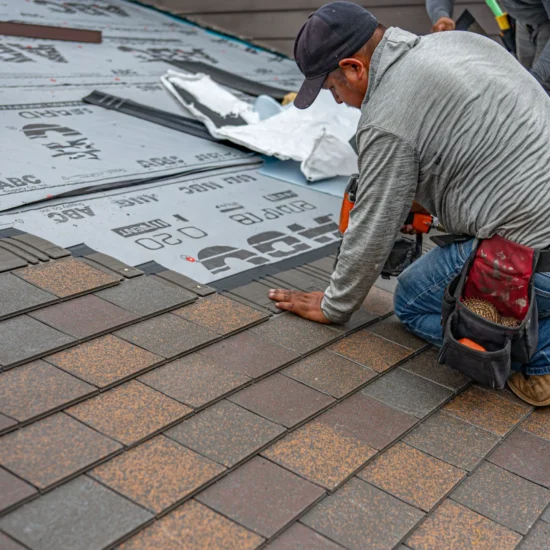
Building systems rarely fail in clean, linear patterns. Roofing assemblies experience vastly different life spans depending on installation quality, climate exposure, maintenance practices, and material changes. Mechanical systems may survive well beyond expected useful life in one property, while a catastrophic failure of the same type of system may occur at another property well before the expected failure date.
Meanwhile, the standard procedure used by most studies is to compress these highly variable conditions into simplified “remaining useful life” estimates that imply far more certainty than the data supports.
Politics of Reserve Funding: Reserve studies that recommend large increases in reserve contributions may trigger homeowner backlash against the board or management company. Conversely, buyers and mortgage lenders may balk when the forecasted funding strategy requires an annual increase in the reserve contributions that is many multiples of the inflation rate. The reserve study becomes not merely a predictive instrument, but a political and economic tool operating within a complex web of incentives.
This problem intensifies when reserve studies are used as marketing documents rather than analytical documents. Developers, conversion projects, and poorly governed associations all have incentives to minimize visible future liabilities. During the condominium conversion boom of the late 1990s and early 2000s, many aging apartment properties were cosmetically upgraded and sold to buyers with reserve funding structures that proved grossly inadequate for long-term sustainability. Fast forward twenty years, and many of these converted properties are paying the price in the form of huge special assessments, often tied to a bank loan repayment schedule that extends into the middle of the 21st century.
The reserve study industry rarely confronts this history directly because doing so would require acknowledging how many forecasting failures were embedded into the original models themselves. Even modern studies continue to struggle with deferred maintenance distortion.
Deferred Maintenance: Most reserve models implicitly assume that assets are maintained according to standard schedules and that deterioration occurs within predictable, and linear ranges (every 2-year, 5 year, 20-year, etc.). Many associations systematically defer maintenance due to political and economic pressure from the membership or governance dysfunction.
Deferred maintenance is not recognized as a liability in the traditional accounting sense, but it is, in fact, a liability; one that can accelerate physical deterioration in nonlinear ways. It can also distort the assumed linear depreciation by shortening the service life of inadequately maintained assets.
A roof that receives proper inspections and repairs may survive several additional years. A neglected roof may trigger hidden structural damage that multiplies downstream costs dramatically. None of the dynamic factors is expressed in the static world of the HOA reserve study.
Traditional reserve study methodologies often fail to model this compounding deterioration effect adequately. Instead, they continue projecting future costs using baseline assumptions that no longer reflect the actual physical condition trajectory of the property. The model remains mathematically clean even as the building itself becomes increasingly unstable.
The Inflation Dagger: The labor and materials environment presents another major blind spot. Construction pricing volatility since 2020 exposed how fragile many long-range reserve assumptions really were. Reserve studies prepared just a few years earlier suddenly became obsolete as labor shortages, supply-chain disruptions, and material inflation transformed replacement costs across the industry. This construction industry-specific price inflation was never anticipated by the reserve practitioner profession, which for decades has assumed annual inflation would remain below 3% for the next 30 years. Associations that believed themselves adequately funded discovered that planned projects had become radically more expensive in a very short period of time.
This was not a temporary anomaly. It was a warning with ominous implications.
The modern reserve study industry still largely assumes a relatively stable macroeconomic environment over long periods. Yet the twenty-first century is increasingly defined by instability: labor shortages, climate adaptation costs, energy volatility, litigation exposure, insurance repricing, and infrastructure stress. Forecasting models built around late twentieth-century assumptions may no longer be appropriate for the environment emerging ahead.
Climate risk further complicates the equation. Buildings located in wildfire zones, flood-prone regions, coastal exposure areas, or extreme heat environments are likely to experience accelerated deterioration and elevated maintenance burdens. Yet climate-adjusted reserve modeling remains remarkably underdeveloped within the HOA sector. Many reserve studies continue using generalized useful-life assumptions that fail to account for increasingly localized environmental stressors.
In effect, many reserve studies are still forecasting tomorrow using yesterday’s climate.
The problem becomes even more dangerous because reserve studies are frequently treated as objective truth by stakeholders who lack the technical expertise to challenge the underlying assumptions. Buyers see percent-funded metrics and assume financial safety. Boards see contribution schedules and assume long-term sufficiency. Realtors see reserve balances and interpret them as indicators of stability. But percentages and balances alone reveal very little unless the predictive assumptions behind them are sound.
A poorly constructed reserve study can create a false sense of security more dangerous than obvious underfunding. At least severe underfunding is visible. A polished, but flawed, study may conceal risk until the system finally breaks under the weight of accumulated inaccuracies.
A Credibility Crisis Waiting to Happen: This is why the reserve study industry increasingly resembles a credibility crisis waiting to happen. The sector lacks the degree of standardized methodology found in mature actuarial or financial forecasting disciplines:
- Terminology varies.
- Useful-life assumptions vary.
- Inflation assumptions vary. Site inspection standards vary.
- Funding philosophies vary.
- Some studies are deeply rigorous.
- Others are little more than templated spreadsheet exercises with minimal field analysis.
As a result, the market has difficulty distinguishing between high-quality predictive analysis and low-quality financial theater.
Fixing the Problem: To fix the problem will require more than cosmetic reforms. It will require that the casual approach to reserve planning is discarded.
- Professional standards must be established.
- Education, testing, and licensing must be instituted.
- The industry must shift away from static reserve planning and toward adaptive risk modeling.
- Reserve studies must be subjected to validation.
- Reserve study practitioners must be held to a strict code of conduct that prohibits the practice of self-enrichment at the client’s expense.
- The days of the entrenched reserve study provider that spends 20 years updating the same study over and over must become a thing of the past.
That means incorporating dynamic deterioration modeling, localized climate risk, insurance-market signals, maintenance-compliance metrics, and scenario-based stress testing. It means acknowledging uncertainty openly rather than burying it beneath artificially precise tables. It also means separating the reserve forecasting business from conflicted vendor ecosystems that plague the common interest community marketplace.
The Future with the Fix: The future in which reserve planning is the bedrock of the sustainable HOA will require a hybrid system combining engineering analysis, actuarial mathematics, machine learning, and live financial monitoring. Instead of assuming a single deterministic outcome, future models may evaluate multiple pathways based on changing variables over time. Associations will be assigned rolling risk scores rather than static snapshots of “percent funded.”
In conclusion: In many ways, the reserve study industry now sits where credit-rating agencies stood before the 2008 financial crisis: heavily relied upon, insufficiently scrutinized, and deeply vulnerable to systemic incentive distortions.
That does not mean reserve studies are useless. On the contrary, they remain essential tools for long-term capital planning. But they must be understood for what they truly are: probabilistic forecasting instruments operating within highly uncertain environments – not crystal balls delivering guaranteed financial truth.
The most dangerous reserve study is not necessarily the one that reflects low, underfunded reserves. It is the one that convinces everyone the future is under control when the underlying assumptions are broken.
Because You’re Buying More than a Home!