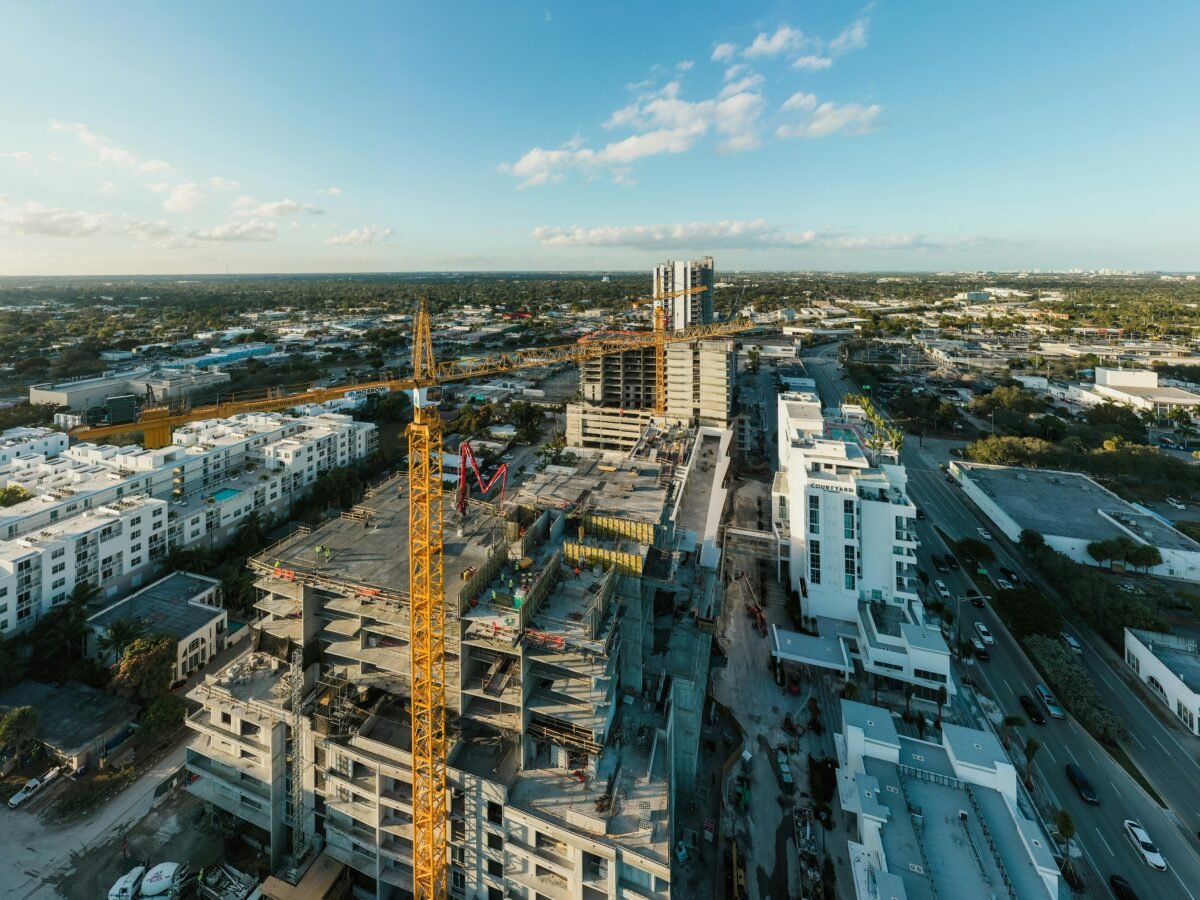
HOA Detective™ | April 17, 2026: Once the dust settled in Surfside, Florida, the industry tried to tell the world the collapse was an outlier – a tragic convergence of engineering failure, deferred maintenance, and bad luck.
Whether true or not, we will let everyone decide for themselves. Regardless, the official story is no longer credible. What we are witnessing now, half a century after the birth of CAI and the emergence of privatized, common-interest developments as the dominant form of new housing in the U.S., is a full-scale stress test of the CID financial model, in particular with respect to condominium developments.
Under the stress of aging buildings and privately owned infrastructure, the system is beginning to reveal what it actually is – not what it has claimed to be for the past five decades.
From “Planning Tool” to Regulatory Exposure: For forty years, reserve studies have existed in a convenient gray zone. The industry position on reserve studies:
Great idea, but don’t lose too much sleep if you don’t bother.
They were presented as technical documents, even quasi-actuarial in tone. In practice, they functioned as advisory instruments – useful when aligned with board priorities, ignorable when they were not. This ambiguity is disappearing. In the wake of the Champlain Tower South Condominium (CTSC) collapse, Florida enacted “sweeping statutory reforms” requiring milestone structural inspections and prohibiting the waiver of reserve funding for critical components. ¹
Never mind that, as far back as 2008, Florida signaled the need for statutory oversight – and then backed away from a state-wide mandate for structural condition assessments for buildings three stories and taller, after being lobbied by powerful interest groups.
What Happened? Inquiring Minds Ask: Well, after the Florida legislature quickly caved in to pressure from the condo lobby and other special interests, nothing happened until the morning of June 24, 2021.
In the aftermath of the deadly collapse, Florida and other states, including California, New Jersey, Maryland, and Colorado, are moving in the direction of focusing regulatory expectations around inspection cycles, disclosures, and reserve funding adequacy.
The shift is subtle in language, but profound in effect. Reserve studies are no longer optional planning tools. They are becoming liability documents. Consider the following:
- The Association without a reserve study is opening itself up to criticism from all corners of the market: Buyers, lenders, and insurance underwriters.
- The provider of the “structural integrity reserve study” (SIRS) is now front and center, and squarely in the hot seat – a role that few RS providers are qualified to play.
- Even more troubling for RS providers is that the traditional industry compensation model for those who conduct RSs is entirely inadequate.
- From a strict legal perspective, the person who takes responsibility for the SIRS should be a licensed structural engineer, among the costliest experts that can be introduced to the conversation.
All of this raises a fundamental question the industry has largely avoided, which is, when will reserve study providers be required to undergo education, testing, registration, and licensing at the state or perhaps federal level?
Insurance Carriers: The First Real Underwriters of Reality: While regulators debate the reserve study issue, the insurance carriers have already acted. They are no longer underwriting based on representations. They are underwriting based on actual conditions. Across the market, carriers are now:
- Requiring third-party engineering reports.
- Scrutinizing reserve studies for recency and methodology.
- Denying or restricting coverage where deferred maintenance is evident.
- Replacement Cost Appraisals (RCAs) – unheard of for years in most parts of the country – are now advised, if not required, for underwriting.
The consequences are no longer theoretical:
- Non-renewals of master policies.
- Deductibles that materially impair insurability.
- Targeted exclusions tied to building systems.
- Guaranteed Replacement Cost coverage is harder to find and is more expensive, while in some locations it is not available at all.
Reserve studies have traditionally been used to define the risk by establishing the framework for the replacement cost of the common improvement insured by the Association. Nowadays, insurers are independently defining risk – and in doing so, they are exposing the gap between modeled projections and physical reality.
Special Assessments: The System’s Default Setting: The industry still speaks of special assessments as rare events. Fifty years into the CID experiment, we are finding that they are not rare. They are actually quite predictable and commonplace within certain subsets of CIDs.
As of 2026, the median age of homes in the U.S. is 42 years, based on research published by the NAHB in early 2025. Across the country, HOAs are growing older by the year, with a high percentage now at least 30 years of age.
Unit owners are facing special assessments ranging from $20,000 to over $100,000 per unit. These are not discretionary improvements. They are the accumulated consequences of years, if not decades, of deferred reserve funding.
The pattern that was obvious to industry insiders for years is now systemic:
- Chronic underfunding of reserves.
- Deferred or minimized maintenance.
- External trigger (inspection failure, insurance demand, or system breakdown).
- Immediate capital call results in a special assessment.
- Oftentimes, the sequence leads to borrowing by the HOA, leaving early generation owners saddled with a debt service burden until the middle of the 21st century.
A Case Study in Plain Sight: As a case study, consider a large, urban condominium association that was recently the subject of a CIDA HOA INTELLIGENCE REPORT™. With an examination history extending across six years, 2020-2026. The pattern described here is not unusual, which is precisely the problem. Over a five-year period:
- Annual revenues increased materially (roughly +30% 2000-2026.
- 30-year Reserve spending liability of ~$21M in 2021 to $35 million in the 2024 study.
- Meanwhile, the 2024 study exposes a near-term capital need of $10 million within the 2026-2035 window.
- All of this recent bad news is on top of the ~$8M rehabilitation program undertaken by the Association in the 2018-2020 timeframe.
- As the dust settles, we find that reserve funding levels have declined from already weak levels (~25%) to critically low (~18%).
At the same time, the Association:
- Relied repeatedly on special assessments and bank loans to fund capital projects.
- Is currently considering additional borrowing in the $7 million range to “restructure” the capital base.
- Failed to produce complete and current disclosure packages during resale transactions.
The Result is a Feedback Loop: Assess → Borrow → Repair → Repeat
From a buyer’s perspective, the implications are direct:
- High probability of near-term special assessments.
- Continued escalation of monthly dues.
- Uncertain total cost of ownership
This is not a failing caused by a lack of awareness. It is structural inertia, i.e., an inability to transition from reactive funding to proactive capital planning. In other words:
“The problem isn’t that the system failed. The problem is that it worked exactly as designed.”
The Credibility Crisis: Inside underwriting departments, lender reviews, and increasingly in escrow, a new set of questions is emerging:
- Who prepared this reserve study?
- Was there a credible site inspection conducted?
- What assumptions were used – and do they reflect current cost realities?
These are credibility filters, and they are exposing recurring deficiencies:
- Inflation assumptions disconnected from construction cost escalation.
- Outdated or templated component cost libraries.
- Minimal field verification in updated studies.
- Embedded conflicts between management, vendors, and reserve study preparers.
Buyers and Lenders: The Awakening Phase: For years, HOA financials were treated as secondary in real estate transactions. That era is ending, particularly at higher price points.
Fannie Mae’s updated condominium lending guidelines now place increased emphasis on structural integrity, deferred maintenance, and reserve adequacy as underwriting factors. ²
At the transaction level, buyers and agents are beginning to focus on:
- Reserve sufficiency beyond superficial “percent funded” metrics.
- Timing and scale of upcoming capital projects.
- Insurance constraints affecting long-term viability
Deals are failing or repricing based on:
- Pending special assessments.
- Missing or outdated reserve studies.
- Financial disclosures that do not align with the observable building condition.
Standardized document requests are no longer an administrative annoyance. They are critical buyer risk filters.
The 20–40 Year Convergence Event: What the HOA Detective™ has long identified as the “20-Year Tipping Point” is now fully visible. Buildings constructed between the mid-1980s and mid 2000s are entering synchronized capital expenditure cycles. Major systems –roofs, envelopes, mechanical infrastructure – are reaching the end-of-life replacement cycle within overlapping timeframes. At the same time, they face external constraints:
- Persistent construction cost inflation.
- Skilled labor shortages.
- Insurance underwriting pressure.
- Financing limitations.
Growing market resistance to older, underfunded HOAs.
The Structural Reset: Few Associations are capitalized to handle this convergence. The result is a widening gap between required capital and available reserves. This is not a temporary disruption. It is a repricing of risk across an entire CID asset class.
Reserve studies are being tested against real-world outcomes. Insurance carriers are acting as de facto regulators. Boards are being forced into decisions long deferred. The central issue is now unavoidable. The credibility of the reserve study itself is under examination. The credibility of the HOA governance model itself is being put to the test, and it is a test that many Boards are failing.
The Transition Period: In periods of structural transition, the market looks for verification mechanisms. Not a new opinion, better validation. This is where a data-driven framework like CIDAnalytics AVIDA HOA Intelligence™ becomes relevant. Not as a replacement for reserve studies, but as a second layer of analysis – one that tests assumptions against observed outcomes, identifies structural inconsistencies, and translates financial data into risk signals.
The question is what kind of system will replace the failed model, now half a century in the making?
A system that continues to rely on optimistic assumptions and political convenience will reproduce the same outcomes – kicking the proverbial can down the road, until we run out of road. A system that subjects its core financial instruments to real scrutiny, validation, and responsible regulatory oversight has a chance to evolve into a sustainable CID ecosystem.
Endnotes
- Florida Statutes §553.899 (Milestone Inspections) and §718.112 (Condominium Reserve Requirements), as amended following the Surfside collapse.
- Federal National Mortgage Association (Fannie Mae), Condominium Project Standards Updates (2022–2024), including requirements addressing deferred maintenance, structural integrity, and reserve funding adequacy.