Part 6: Beyond Downtown New Orleans Security Districts and the Suburban PSD Frontier
HOA Detective™ | Feb 27, 2026: Special Series Preamble: This article is Part 6 of a special series by the HOA Detective™ examining the rise of a “Private Metropolis” technostate ¹ – a creeping governance layer that is reengineering and steadily replacing traditional municipal models with privatized, assessment-funded systems of control, service delivery, and rules enforcement. Among the various entities that are utilized by the designers of the techno state are:
- Privatize Special Districts (PSDs);
- Business Improvement Districts (BIDs);
- Community Benefit Districts (CBDs);
- Enhanced Service Districts (ESDs);
- Special Service Areas (SSAs);
- Security Taxing Districts (STDs).
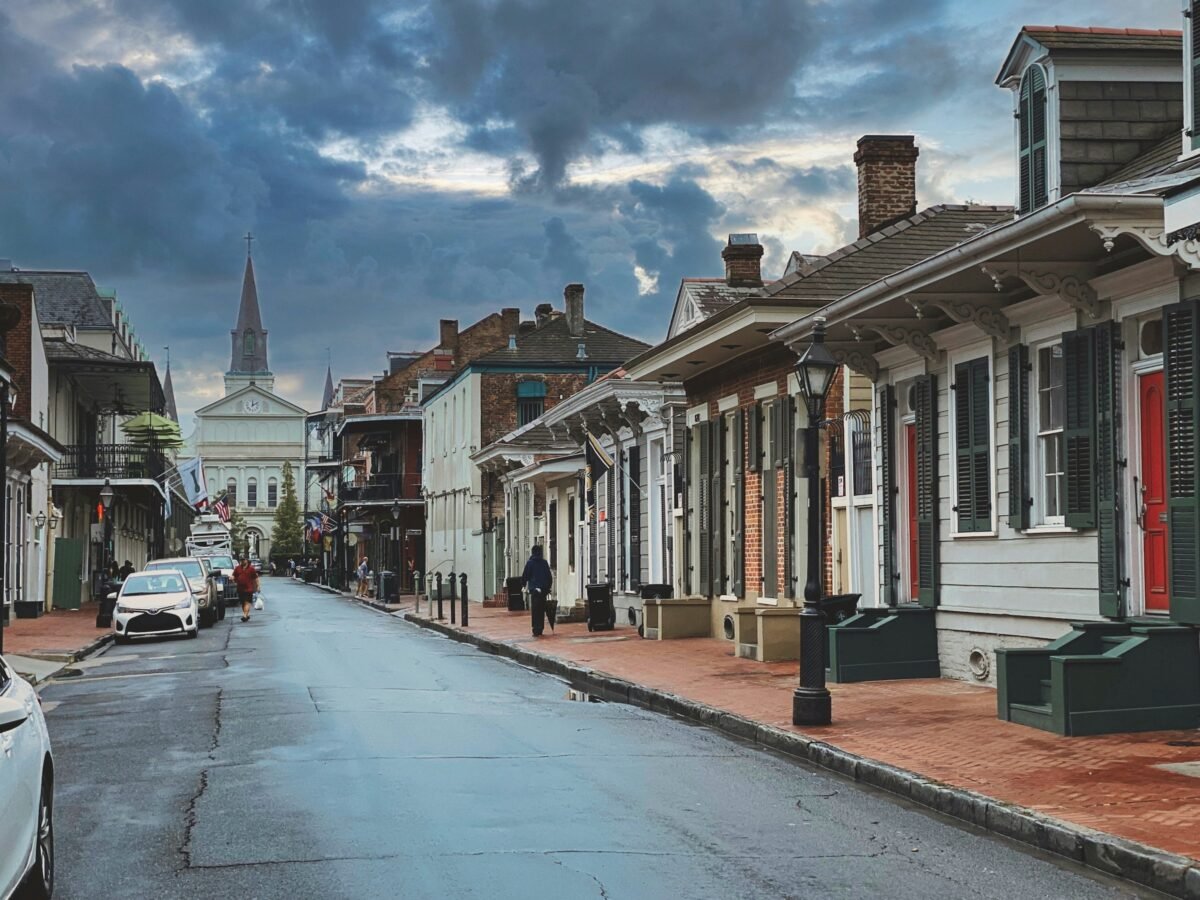
New Orleans Neighborhood Security Districts: The New Orleans, LA, contribution to the alphabet soup of PSD models is the Security Taxing Districts (STDs), a PSD with the mask removed. No “ambassador” euphemism. No placemaking poetry. The Big Easy is known for being bold and in-your-face. The PSD pitch in the land of Mardi Gras is equally blunt:
The city cannot provide adequate policing; this is obvious to anyone who has spent time in New Orleans. If you want secure streets and businesses, you pay extra to buy it – old-fashioned mob-style protection money. That framing matters because it reveals what PSDs really do when the marketing layer peels off; they convert core public services into purchasable upgrades. Those living below the poverty line, who cannot afford a secure lifestyle or business? Too bad!
Governance Profile: The New Orleans nomenclature is populated with numerous acronyms that are used to identify neighborhood security districts, more formally known as Security Taxing Districts (STDs) – and no, we are not talking about sexually transmitted diseases:
- Lake Vista Crime Prevention District (LVCPD)
- Lake Terrace Crime Prevention District (LTCPD)
- Lakeshore Crime Prevention District (LSCPD)
- Lakewood Crime Prevention and Improvement District (LCPID)
- Lakeview Crime Prevention District (LCPD)
Mid-City Security District (MCSD)
- Upper Audubon Security District ² (UASD)
- Garden District Security District (GDSD)
- Touro-Bouligny Security District (TBSD)
- Twinbrook Security District (TBSD)
- Upper Hurstville Security District (UHSD)
- Pressburg East Neighborhood Improvement and Security District (PENISD)
- Seabrook Neighborhood Improvement and Security District (SNISD)
The proliferation of STDs at the scale seen in cities like New Orleans leads to
a two-tier public realm. If a neighborhood has sufficient assessment capacity – or sufficient political cohesion to impose the extra levy – it can effectively subscribe to more patrol coverage, more visibility, more deterrence, and (often) more discretionary attention from public agencies that coordinate with private patrols.
If it cannot, it lives with the baseline – whatever “baseline” happens to mean after the city adapts to the existence of self-funded security zones. Those who are familiar with the City of New Orleans can attest to the fact that “baseline” public services are not a point of pride.
Enter the Private Metropolis: This is where the privatized technostate metropolis becomes tangible. The legitimacy of all municipal entities rests on the promise of equal protection and uniform public services, whether it is a small city, a mega metropolis, or a county parish-wide administration. Security districts normalize the opposite with differential coverage for those who can afford it – as a feature, not a failure.
Working this unevenness into the design encourages acceptance of the privatized technostate until it spreads – like a different type of STD – as the political system learns that the easiest way to manage the public’s demand for safety is not to rebuild public capacity, but to let neighborhoods buy their own patch.
This “patchwork” framing is not rhetorical excess; it is the structural logic upon which the New Orleans PSD model is predicated. Special districts do not fix municipal underperformance. They route around it. They create a parallel delivery channel funded by compulsory localized levies. The public sees faster results. The political system avoids the difficult conversation about why the city’s general fund cannot deliver a baseline level of services that residents expect. Carlos Marcello, the Godfather of New Orleans, would have jumped at the chance to operate in such an environment.
Suburban Infrastructure and Developer-Initiated Districts: If the New Orleans example shows the PSD model operating at street level, the suburban frontier shows the same mechanism operating at system scale. In fast‑growing regions, district frameworks are used to finance infrastructure – roads, utilities, parks, stormwater systems, lighting, sidewalks – through bond-funded capital programs paid back by assessment streams attached to the land.
The treatise highlights Florida’s Community Development Districts (CDDs) as a prominent example, but the core concept is portable across states: build the project now, finance it through long‑lived assessments, and make future residents the repayment base.
This is where PSDs graduate from “downtown service extras” into governance infrastructure. The district is not only maintaining public space; it is manufacturing it. The district becomes a financing vehicle, a contracting vehicle, and (over time) a political vehicle – because whoever controls the district’s governance controls its priorities, its vendors, its service levels, and its debt schedule.
Hurricane Katrina didn’t lead directly to the invention of PSDs/STDs in New Orleans, but it normalized the “pay extra for safety” logic at scale. The New Orleans Office of Inspector General notes that after an initial wave of district formation in the late 1990s and early 2000s, after Katrina, new district formation continued across the city.³ The post-Katrina rebuilding era didn’t reverse the model – it provided conditions in which the model could flourish.
Policy Risk is Structural: Developers and bondholders can lock in long-lived financing and governance arrangements before residents have meaningful political agency. The community arrives after the machinery is installed. In HOA terms, it is the equivalent of the Declarant phase expanded into a quasi‑government, complete with assessment authority and capital debt. Residents inherit obligations that were negotiated long before they had a vote, and the “choice” presented at purchase is often a false choice: accept the district’s payment structure or do not live there at all.
The suburban PSD frontier is the HOA template upgraded with a pay-to-play feature. HOAs privatize municipal functions inside private property lines through dues, covenants, and internal governance.
Development districts privatize municipal functions outside the HOA lines, levying assessments tied to property or the business licensing process. PSDs may require public authorization (vote) and bond financing, but not always. Under either system, those who can afford the best services receive the best services. Taxpayers and property owners at the economic margins are disempowered and often receive less in the way of services.
Both systems socialize costs to residents while concentrating governance power in the parties most capable of shaping the initial documents and contractual relationships, and those who have the time and money to serve as influencers. Depending on the model, services may be delivered by for-profit enterprises. In others, the quasi-public financing model can easily lead to a near “pension fund” level of recurring revenue for the service providers positioned to receive the most benefit.
The Series Thesis Re-stated Again: Whether the PSD is a CBD in San Francisco, an SSA in Chicago, a Clean & Safe ESD in Portland, or a neighborhood security district in New Orleans, the mechanism repeats because it is effective at what it is designed to do:
- Privatize a public function.
- Finance it through compulsory localized levies.
- Govern it through boards dominated by those with concentrated economic stakes.
- Market it as a pragmatic necessity, then normalize it as permanent.
Missing from this List: Democratic consent proportionate to impact. In most PSD structures, consent is either weighted toward property interests or delayed until after the framework is entrenched. The model’s durability does not come from public enthusiasm; it comes from institutional lock‑in.
Governance Failure Mode: ‘Supplement’ Becomes Substitute: Every PSD architecture repeats the same disclaimer: supplemental services, without the disclaimer that these are the ONLY services available under the regime. Once a district reliably delivers cleaning, security presence, marketing, or infrastructure maintenance, political pressure to fund the baseline layer weakens – especially in the very zones where complaints used to concentrate. The district becomes a relief valve. City leadership can claim progress without rebuilding the public apparatus that created the demand in the first place.
Security districts make that substitution particularly dangerous, because coercive capacity is not neutral. A private patrol force – no matter how it is branded – has different incentives than a public police department, theoretically accountable to the entire city. Ultimately, the Private Metropolis becomes a cartographer of exclusion.
The suburban financing districts are a substitute for capital budgeting at the municipal level. Municipalities can offload the political cost of bonds and taxes by allowing districts to finance infrastructure through localized assessment debt. The upfront city budget looks healthier. The long-term cost doesn’t disappear; it is simply reallocated onto residents, packaged into line items that many buyers do not understand until years later. Somewhere along the way, public approval is lost in the shuffle.
HOA Detective™ Closing Takeaway: PSDs are not merely ‘creative local government.’ They are a “governance technology” financing model – an extension of the HOA template into the public realm. New Orleans security districts show the logic in its most direct form: pay extra to buy public and personal safety. The suburban district frontier shows the next stage: pay extra, buy infrastructure, inherit debt, and accept governance rules installed before you arrived.
If we accept the model without demanding hard transparency, clear democratic representation, and enforceable limits on quasi-policing, we should not be surprised when ‘special districts’ become the new default and public citizenship becomes a fee-for-service subscription-based model.
Notes | Sources
1. Technostate (techno-state – A governance regime where public functions are increasingly run through technocratic and technology-enabled systems (metrics, platforms, surveillance, compliance), shifting power from elected accountability toward managerial control by agencies and contractors, justified as “efficiency” and “risk management.”
2. City of New Orleans – Audubon Area Security District – as an example, with more than a dozen such STDs woven into the municipal fabric.
https://nola.gov/next/government/boards/browse/audubon-area-security-district
3. New Orleans Office of Inspector General, Review of New Orleans Security Taxing Districts (Final Report, Sept. 24, 2013), p. 9: – link not available due to website security measures.
Because You’re Buying More than a Home!