“Workforce housing” in The ’Couve will not be found in the Kirkland Tower.
HOA Detective™ | July 28, 2026: That much is clear from the current sales inventory. Kirkland Tower’s remaining residences are being offered at prices ranging from $750,000 to $3.3 million. The 12-story building contains only 40 condominiums, paired with the Hotel Indigo and an amenity package designed for a decidedly affluent clientele. This is luxury housing in every meaningful sense of the word.
It is also tax-assisted luxury housing.
In February 2017, the City of Vancouver, WA approved Kirkland Tower for an eight-year exemption under its Multi-Family Housing Limited Property Tax Exemption program, commonly known as MFTE. The program is authorized by Washington law and publicly associated with increasing housing supply and expanding housing opportunities.
Kirkland Tower certainly added housing – 40 ownership units ranging from roughly 900 to 3,100 square feet. What it did not add, so far as the available public record shows, was housing for the people now antiseptically assigned to the category of “workforce housing” by the Ivy League-educated urban planning profession that has remolded the housing landscape throughout the First World in the last half century.
What Happened to the Middle Class?
“Workforce housing” is the fashionable term for what our parents’ generation simply called middle-class housing. This language change may be subtle, but it is not harmless.
The term “middle-class housing” used to describe the market strata between lower income/poverty level housing and the upper levels of ownership implied a social expectation. The expectation was that ordinary working Americans should be able to buy decent homes, raise a family, establish themselves in a community, and accumulate some measure of financial security.
Homeownership was not reserved for aristocrats, financiers, or people fortunate enough to arrive early in a rapidly appreciating market. It was supposed to be available to teachers, nurses, tradespeople, office workers, small-business owners and the people who kept a city functioning.
“Workforce housing” describes those same people primarily by their usefulness to someone else. They are no longer citizens attempting to acquire a stake in their community. They are the labor supply required to staff the restaurants, hotels, hospitals, schools, offices, and service businesses that support the preferred residents of the expensive real estate.
It is a despicable classist turn of phrase. We have quietly demoted the middle class into a “workforce” and then congratulate ourselves for contemplating where the workforce might be housed as we take up residency in luxury high-rise condominiums with gated garages and perhaps a “cement pond” on the roof!
A Project That Missed Its Window: The original conditional MFTE certificate required Kirkland Tower to obtain its certificate of occupancy by February 23, 2020. When the development missed the deadline, the original deadline was first extended to February 23, 2022. When that date passed, the City granted another extension to July 23, 2022.
When the project still was not completed, the City once again extended the deadline in November 2022, this time through May 23, 2023. The final deadline was approximately three years and three months beyond the date specified in the original agreement.
Of course, the City needed those 40 luxury condominium units to anchor the new Vancouver Waterfront development. The tax-subsidized status of the development would certainly help to attract the most affluent segment of the housing market, possibly even some from nearby Portland where the property taxes are even higher, and the tax abatements used to jump-start inner city developments like The Pearl District have long since expired.
Truly a “win-win” buying opportunity if you are in the market for a million-dollar condo on the Vancouver Waterfront.
The City’s resolution cited the economic downturn and COVID-related difficulties affecting new housing construction. Those were real circumstances. A development combining a hotel with 40 high-end condominiums could hardly have been more poorly positioned for the pandemic, followed by rapidly rising interest rates and a weakening condominium market.
“The Vid” Strikes Again! The original project approval with its tax exemption was issued in 2017 – three years before COVID-19. Forty large, highly serviced condominiums at the upper edge of the Vancouver market were always a narrow proposition. The pandemic did not create that risk. It merely exposed the project as a highly specialized development concept that some have argued was simply another ill-conceived real estate scheme in a larger market where perhaps 100 desperately needed affordable housing units could have been built with the same amount of money.
The Public Benefit: By the time of the final extension, the City required Kirkland Tower to satisfy the then-current public-benefit requirement for market-rate MFTE projects. The solution was not affordable housing. Waterfront Holdings Group I agreed to contribute $537,500 toward public infrastructure improvements near the property. The amount was calculated as 25 percent of the estimated value of the tax benefit. It could be paid as condominium sales occurred, but no later than May 23, 2023, and was backed by a personal guaranty.
The City’s own analysis estimated the present value of property-tax revenue forgone during the eight-year exemption at approximately $2.15 million across all taxing districts, including approximately $856,000 attributable to the City of Vancouver. Against that figure, the developer’s $537,500 contribution looks less like repayment than a discounted admission price. It is not an absurd argument, but it should be described honestly.
The Kirkland Tower subsidy was economic-development assistance for a luxury project – not an affordable-housing achievement. With forty condo owners settled into their multi-million-dollar housing, complete with EV chargers in the garage, everybody is ready for the 21st century, climate change or not.
Market Rate Above, Workforce Below: Nothing about Kirkland Tower suggests that it was intended for teachers, nurses, tradespeople, service workers or small-business employees – the households’ previous generations simply called “the middle class.”
A $750,000 entry point, before association assessments, property taxes, insurance and future capital obligations, is not affordable housing by the standards of The ’Couve – local hipster lingo for Vancouver, WA for those not in the know.
The upper end of the local housing inventory barely touches the $750-$1 million bracket. The current Vancouver housing development phase reveals the social arrangement:
- Market-rate luxury housing occupies the waterfront.
- Owner-occupied “Workforce housing” is expected to appear somewhere less valuable.
- Close-in housing where workers can reach the waterfront to clean the hotel rooms, cook the meals, tend the landscaping, and provide the services demanded by the people upstairs is predominantly newly-constructed rental apartments.
The 21st-century housing landscape has more in common with company towns than with the postwar American middle class. The question is no longer whether working people can become property owners and accumulate wealth. The question is how inexpensively they can be sheltered within commuting distance of their assigned “workforce” function.
The Old Vancouver Guard: At least two of the prominent condominiums in the immediate area have been around long enough to have become Vancouver’s Old Guard downtown condominium developments:
Vancouvercenter and Heritage Place condominium properties have been operational for more than 20 years. These pioneering developments received no tax subsidy in the case of Heritage Place, while the Vancouvercenter development, being part of a larger urban renewal effort, did benefit from a combination of city/private funding. However, each of these developments contains in excess of 100 housing units that by 21st-century standards would be considered affordable when they were originally sold.
By any measure, these late-20th-century projects should be considered a success in the campaign to bring affordable housing to the urban core of Vancouver, WA.
Meanwhile, under the 21st century urban housing development model, affluent buyers receive a tax-assisted luxury product on the spectacular Vancouver waterfront while the “workforce” is relegated to the tenant class destined to live out their lives in rented apartments, unless they get lucky and manage to secure a toe-hold on the property ladder outside the inner city.
Elsewhere in the city, buyers are left with older condominiums whose sticker price may exclude a meaningful share of the building’s deferred ownership cost and the all-too-common legacy of decades of dysfunctional HOA governance.
Truman-Style, Plain Spoken Language: The City of Vancouver, WA granted an eight-year tax exemption to a 40-unit luxury condominium, extended the completion period repeatedly when the project failed to meet its original deadline, and ultimately accepted a “public-benefit payment” equal to one quarter of the estimated tax benefit.
The money was to be directed to nearby waterfront infrastructure improvements, enhancing the same district and property receiving the exemption. The improvements do not benefit the members of the “workforce” living in East or North Vancouver, or anywhere nearby the area where the Kirkland Tower is located.
Conclusion: If public officials want to defend the arrangement, they should do so in plain language. Vancouver subsidized the completion of a market-rate luxury project because it considered that project important to the waterfront’s success. Perhaps this was a defensible decision.
The same plain language should apply to the people excluded from the public largesse. This subset of the population is not merely a workforce to be housed. They are the remnants of an American middle class whose reasonable expectation of ownership is being edited out of public policy, one sterile phrase at a time.
NOTES | SOURCES
1. City of Vancouver, “Kirkland Tower MFTE Certificate Extension,” presentation to the Vancouver City Council, November 28, 2022. The presentation identifies 40 ownership units, an eight-year exemption, the extension chronology, the estimated tax effects, and the proposed $537,500 public-benefit contribution. https://vancouvercity.novusagenda.com/agendapublic/AttachmentViewer.ashx?AttachmentID=7762&ItemID=2879
2. City of Vancouver, Resolution approving the Multi-Family Housing Limited Property Tax Exemption Extension Agreement with Waterfront Holdings Group I, November 28, 2022. The resolution characterizes Kirkland Tower as a market-rate project and states that the contribution was equivalent to 25 percent of the estimated tax benefit. https://vancouvercity.novusagenda.com/agendapublic/AttachmentViewer.ashx?AttachmentID=7763&ItemID=2879
3. City of Vancouver, “Multi-Family Housing Tax Exemption Program Manual,” updated December 2025. The manual distinguishes income-based projects from eight-year market-rate projects and explains the fee-in-lieu mechanism. https://www.cityofvancouver.us/wp-content/uploads/2026/04/MFTE-Program-Manual-Version-2023-Acess.-Updates-2026.pdf
4. RubyHome Northwest, “Kirkland Tower Condos for Sale,” accessed July 27, 2026. Current listings shown on the cited date ranged from approximately $750,000 to $3.299 million. https://www.greatvancouverhomes.com/vancouver-wa/kirkland-tower/
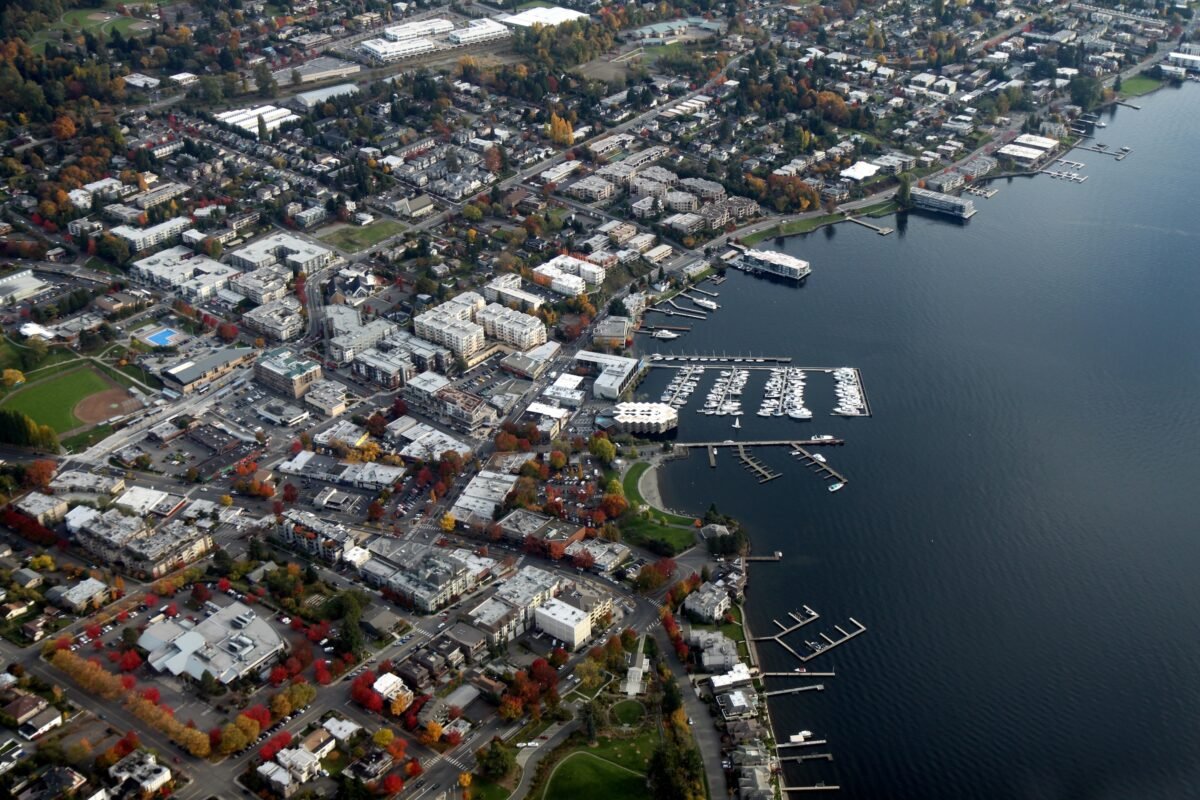
5. Image Attribution: By Jelson25 – Own work, CC BY-SA 3.0, https://commons.wikimedia.org/w/index.php?curid=18313252
Because You’re Buying More than a Home!