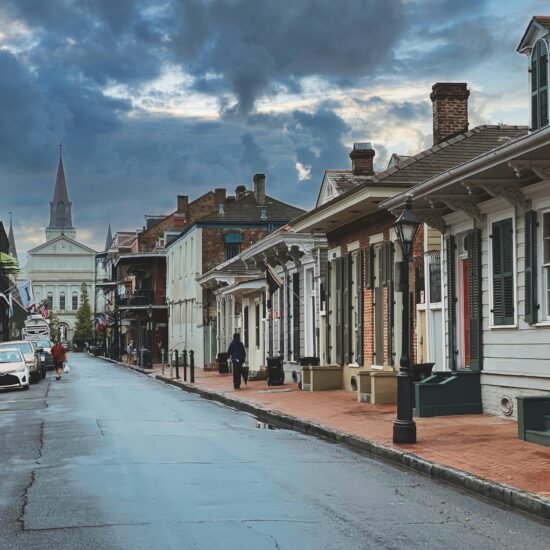
The homeowner association was not invented in one place or by one person. It emerged as social reform, private development, federal mortgage policy, mass production, and industry standardization converged.
HOA Detective™ | August 14, 2026: The North American homeowners association did not spring fully formed from the imagination of a single planner, developer, or government official. It emerged gradually as a cast of reformers, planners, builders, federal policymakers, and trade organizations transformed the idea of a planned community into a durable system of privatized residential government.
The American Prehistory of Private Community: The early progenitors of the common interest community/privatized housing development in the U.S. did not enter an empty field. Several prominent American residential developments had already combined private planning, common amenities, continuing maintenance obligations, and varying degrees of owner regulation by the time the people mentioned in this article appeared on the American real estate development landscape.
- New York’s Gramercy Park, laid out beginning in 1831, placed a private park in the shared ownership of the surrounding property owners.
- Llewellyn Park, established in New Jersey in the 1850s, linked privately owned homes to a common natural area maintained through mandatory annual charges; its proprietors elected managers to administer the community.
- Riverside, Illinois, planned by Frederick Law Olmsted and Calvert Vaux beginning in 1868, demonstrated comprehensive suburban design organized around curving streets, landscaped open space, and separation from urban congestion.
- Tuxedo Park, New York, opened in 1886 as a privately controlled and gated residential enclave.
- Roland Park, in Baltimore (1891), employed deed restrictions, architectural approval, permanent maintenance fees, and eventually a resident-controlled corporation responsible for common property and covenant enforcement.[1]
None of these developments were a modern HOA in every respect. Collectively, however, they established much of its working vocabulary before Howard published his Garden City proposal or Nichols began developing the Country Club District: common land, private amenities, recorded restrictions, design control, mandatory financial obligations, resident administration, and institutional continuity.
The Garden City Vision: As we have suggested in the past, English-born Ebenezer Howard (1850-1928) was a transatlantic intellectual precursor to the planned-community movement in the United States, but he was not a direct architect of the American homeowner association. It might be said of Howard that he was an “early influencer,” to use modern social media lingo. During a five-year visit to the U.S. (1871-1876), Howard’s time in Chicago coincided with the early development of Frederick Law Olmsted and Calvert Vaux’s Riverside and their plans for Chicago’s interconnected parks and boulevards. Land-use concepts that became hallmarks of Howard Garden City layouts after he returned to England.
Bellamy and the Intellectual Spark: Edward Bellamy belongs near the beginning of the HOA story, although he was not a community planner, builder, or land developer. His 1888 novel, Looking Backward: 2000–1887, imagined an orderly future society in which private competition had given way to coordinated economic organization. Bellamy did not design subdivisions, write deed restrictions, or propose homeowner boards. His influence was indirect: he helped make comprehensive social organization imaginable.
Among those affected by Bellamy’s reformist vision was indeed Ebenezer Howard, whose To-Morrow: A Peaceful Path to Real Reform, was published in 1898 and reissued in 1902 as Garden Cities of To-morrow. In this treatise, Howard proposed a new settlement model combining the economic and cultural advantages of the city with the health, space, and beauty of the countryside.[2]
Howard’s Garden City was not a HOA prototype in the modern American sense. It was much more a social-reform project, more similar to Bellamy’s vision.
Howard’s Garden City: Community Wealth, not Restrictive Government: Howard envisioned self-contained towns surrounded by permanent agricultural greenbelts. Land would be held collectively or in trust, while increases in land value would help finance roads, parks, utilities, and community services. The economic return generated by development was intended to benefit the community rather than flow exclusively to private landowners.
The first practical experiments – Letchworth Garden City and later Welwyn Garden City –
translated portions of Howard’s vision into real-life developed form. Planners Raymond Unwin and Barry Parker helped give Letchworth its physical character:
- Curving streets;
- Open space;
- Neighborhood-scale design;
- Separation from industrial congestion.
These distinctions were essential to Howard’s Garden City vision. Howard’s project also sought to use coordinated landownership and planning to redistribute the benefits of urban development.
The mature North American HOA would instead use private covenants, compulsory assessments, and owner-controlled corporations to preserve a particular residential environment and protect property values.
Thus, Howard’s Garden City vision supplied part of the planning vocabulary, but it did not supply the finished machinery of private residential government.
J. C. Nichols and the Restrictive Turn: That machinery became much more recognizable in the work of Kansas City developer Jesse Clyde “J. C.” Nichols. Beginning with the Country Club District in the early twentieth century, Nichols combined coordinated subdivision design with recorded restrictions, architectural controls, compulsory financial obligations, and nonprofit homeowners’ associations. His associations maintained amenities, collected assessments, and enforced restrictions after the developer’s direct involvement ended.
In a 1939 account, Nichols explained that voluntary contributions had proven unreliable because some owners accepted neighborhood services while refusing to pay. His solution was a chartered homeowners association empowered to levy charges against land, maintain common improvements, and finance enforcement proceedings.[3]
This was more than neighborhood beautification. It made enforcement “somebody’s authorized business.” Nichols’s system also included many features now considered standard fare in the HOA construct, including:
- Automatically renewable restrictions;
- Architectural standards and review requirements;
- Prescribed setbacks, minimum construction standards;
- Controls over land use.
Nichols publicly promoted these devices as mechanisms for preserving neighborhood character and property values, but his private-governance model carried an exclusionary core. Nichols employed racially restrictive covenants and other discriminatory controls that helped segregate Kansas City and influenced development practices nationally.
The Urban Land Institute has itself acknowledged that Nichols’s legacy was intertwined with both the professionalization of real-estate development and practices that caused lasting social and economic harm.[4]
Howard and Nichols therefore should not be viewed as interchangeable “fathers” of the American HOA. Howard pursued land reform and community benefit. Nichols constructed a privately enforceable system designed to stabilize investment, regulate owners, and preserve a selected social and physical order.
Max Wehrly and the ULI Transmission Belt: Nichols demonstrated the model. Max S. Wehrly helped move community-building knowledge into an institutional system capable of national transmission. Wehrly became a central technical and administrative figure at the Urban Land Institute (ULI).
Through ULI research, publications, councils, and professional networks, community development was converted from the accumulated experience of individual builders into a repeatable body of practice.
The documentary, formative hinge may be ULI’s Community Builders’ Handbook. The HathiTrust record confirms that the Community Builders’ Council published the handbook in 1947, with later editions expanding its reach. [5]
Nichols chaired the ULI’s first product council – Community Builders’ Council – while his development philosophy was closely connected to ULI’s formative period. [6]
The ULI’s 1947 handbook’s significance is larger than any single passage. It represents the moment when techniques associated with pioneering private developers like J.C. Nichols entered an organized technical canon:
- Organized, legally embedded planning principles;
- Deeded land-use restrictions running with the land;
- Common facilities maintained by privatized corporations vs. municipalities;
- Maintenance obligations imposed on privatized corporations vs. municipalities;
- Institutional arrangements intended to survive the original developer.
Institutional arrangements designed to survive the original developer – including mandatory membership in homeowner associations, recorded assessment obligations, architectural review authority, enforcement powers, governing boards, and mechanisms for transferring control from the developer to the property owners.
Wehrly is best understood as a transmission figure – not necessarily the inventor of those devices, but a professional intermediary who helped collect, refine, and circulate them through ULI’s national platform.
FHA Policy and the Federal Multiplier: Private experimentation alone could not have produced the modern HOA landscape. Federal housing policy supplied scale. Under officials including Federal Housing Administration (FHA) land-planning director Seward H. Mott, the FHA developed underwriting standards that rewarded planned, stable, and controlled subdivisions. Its underwriting manuals treated deed restrictions, compatible land uses, neighborhood homogeneity, and long-term protection against “adverse influences” as matters affecting mortgage security.[7]
The FHA did not invent restrictive covenants or neighborhood associations. It made compatible development practices financially advantageous. Because federal mortgage insurance reduced lending risk, FHA standards influenced what lenders would finance and what builders would construct.
Race and Ethnic Discrimination by Design: This process also federalized discrimination. Racially restrictive covenants and segregationist appraisal assumptions became embedded in the mortgage system until legal and political changes – including Shelley v. Kraemer in 1948 and the Fair Housing Act of 1968 – began dismantling their formal enforceability. The exclusionary machinery was altered, but the underlying private-governance structure survived.
Levittown and the Mass-Production Phase: Abraham Levitt and his sons, William and Alfred, contributed a different element: industrial scale. Beginning in 1947, Levitt & Sons applied assembly-line methods, standardized designs, specialized work crews, and federally supported mortgage financing to suburban homebuilding. Levittown did not create the modern HOA, and its original governance structure was less comprehensive than the associations that followed. Its importance lies in demonstrating that an entire planned residential environment could be produced, marketed, restricted, and occupied at extraordinary speed.
The Levitt team turned the planned subdivision from a specialized development product into a mass-market system. In the postwar era, the question was no longer whether private developers could create entire communities. It was how those communities would be maintained and governed after the builders departed.
From Development Practice to an HOA Industry: The final phase was organizational consolidation. The National Association of Home Builders, founded in 1942, represented the industry that converted federal housing demand into subdivisions on a national scale.[8]
ULI supplied research and development doctrine. FHA and other federal agencies shaped finance and underwriting. Developers supplied land, covenants, and common facilities.
By 1973, the Community Associations Institute emerged from joint efforts involving ULI, NAHB, federal housing agencies, lenders, developers, and community-association professionals.[9]
That institutional connection should not be mistaken for proof that every organization—or every individual within them—worked through a single coordinated personal network. The stronger and better-supported conclusion is structural. Each institution occupied a different position in the same expanding development ecosystem:
- ULI organized the technical knowledge.
- FHA made selected practices financeable.
- NAHB helped builders reproduce planned communities at scale.
- CAI professionalized the governance and management of the associations left behind.
Conclusion: No single person invented the North American HOA.
- Edward Bellamy expanded the reform imagination.
- Ebenezer Howard translated reform into a community-planning model.
- J.C. Nichols redirected planned community toward restrictive private government.
- Max Wehrly and ULI transmitted development practice.
- Federal officials converted planning preferences into underwriting incentives.
- The Abraham Levitt family operation demonstrated how mass production of housing could be achieved.
- NAHB spread builder capacity
- CAI institutionalized the resulting governance system.
The HOA was not one invention. It was an accumulation of ideas and individual visions that eventually became the modern home building/community development industry.
In future installments, we will examine in more depth the lives and careers of the individuals who were responsible for common interest housing in the United States and beyond.
Notes
- Historic Districts Council, “Gramercy Park Historic District and Extension”; The Cultural Landscape Foundation, “Llewellyn Park”; National Park Service, “Riverside”; The Cultural Landscape Foundation, “Roland Park”; and Roland Park Civic League, “History.”
- Ebenezer Howard, Garden Cities of To-morrow, 2nd ed. (London: Swan Sonnenschein & Co., 1902), Internet Archive.
- J. C. Nichols, “Restrictions and Homes Associations,” prepared for the J. C. Nichols edition of the National Real Estate Journal, February 1939, 5–9, State Historical Society of Missouri.
- Justin Arnold, “ULI to Rename J.C. Nichols Prize for Visionaries in Urban Development,” Urban Land, July 13, 2020, Urban Land Institute.
- Urban Land Institute, Community Builders’ Council, The Community Builders’ Handbook (Washington, DC: Urban Land Institute, 1947), cataloged with later full-view editions at HathiTrust Digital Library.
- Arnold, “ULI to Rename J.C. Nichols Prize.”
- Federal Housing Administration, Underwriting Manual: Underwriting and Valuation Procedure Under Title II of the National Housing Act, rev. February 1938 (Washington, DC: Federal Housing Administration, 1938), Federal Reserve Bank of St. Louis.
- National Association of Home Builders, “NAHB’s History and Values,” NAHB.
- Tom Skiba, “50 Years and Counting: CAI Celebrates Golden Anniversary,” Ungated, January 4, 2023, Community Associations Institute.
Because You’re Buying More than a Home!