RESERVE PLANNING 101 | Part 3 – What the Reserve Study Cannot Do
Reserve planning can be powerful, but only when The Association decision-makers understand the process and its boundaries.
HOA Detective™ | September 4, 2026: A reserve study is a forecast connected to a restricted bank account, like a retirement account. The reserve study is not:
• An engineering warranty,
• Insurance policy,
• Audit, or a
• Promise that assessments will never rise.
In fact, it is not even a guarantee that the reserve fund will hold sufficient funds at any point in the future to pay for anticipated expenditures. At its very best, even a good reserve study is little more than a guideline, which is exactly why consistently updating the reserve funding plan is so important.
Becoming a Better Steward: The Board of Directors will only become better stewards when they understand the reserve study process, and the limitations of that process. The reserve study does not create money, but it can be the foundational cornerstone that justifies the need for HOA members to contribute the money required to maintain the commonly owned assets over an extended period of time.
Inching Forward with the Plan: The reserve study is not just a “thirty-year” plan, it is a rolling thirty-year plan that inches forward each year, forever, theoretically speaking. The Board must reconcile the plan each year when the budget is prepared, hopefully BEFORE the budget is adopted. If it does, the recommended reserve contribution for the year can be included in the budget.
Hawaii requires that the Association disclose when the preceding year’s reserve contribution was below the amount recommended by the reserve study, and to explain the likely effect of that shortfall on future reserve funding. Maryland requires the governing body to review the most recent reserve study or update it when preparing the proposed annual budget and to provide owners with a summary of its findings. [1]
Don’t Muddy the Water: the Insurance deductibles and loan payments are not replacement components. An insurance deductible is a risk-financing obligation triggered by a covered loss. A loan payment is debt service arising from money already borrowed. Neither is the physical deterioration and replacement of a common component. Placing them in a reserve component schedule can make the plan appear more complete while mixing fundamentally different obligations. This does not mean boards should ignore them. A high deductible may justify a separately identified contingency or insurance-deductible fund if permitted by the governing documents and state law. Loan principal and interest belong in a debt-service schedule and the operating budget or a separately disclosed financing plan. Florida and Hawaii recognize that loans or special assessments may appear in limited reserve-planning contexts, but that does not transform debt service into a reserve replacement expense. [2]
The Reserve Study is not an Audit or Review: The reserve study is an attempt to align future capital replacement and renewal obligations with a funding plan that generates contributions at a rate more or less consistent with the rate of depreciation of the assets for which the reserves have been established.
An independent audit or financial review asks whether the financial statements are fairly presented under the applicable reporting framework and whether the reported cash, transactions, and classifications are supported. The audit/review process looks at the current financial reporting of the organization. The reserve study looks forward in an attempt to forecast the renewal and replacement obligations of the organization.
Together they form a useful control loop. The accountant confirms whether the reserve balance is accurately reported, but it does not confirm whether the amount is adequate at any point. Not now or in the future.
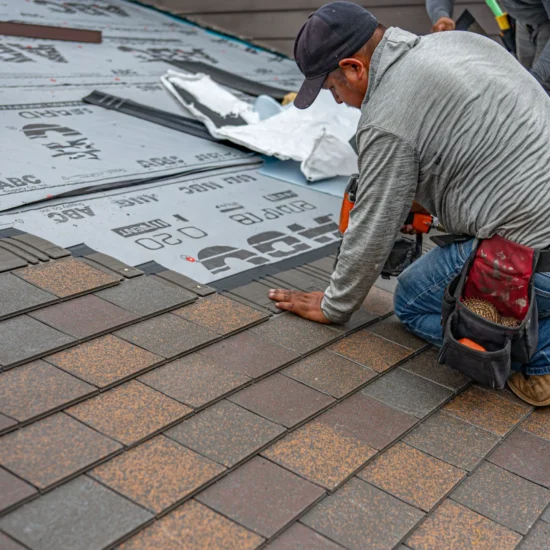
The audit does not determine the roof condition or its remaining life. Nor does it confirm whether the amount of money estimated by the reserve study will be sufficient to pay for a new roof. The reserve study does not confirm whether the reserve fund balance is safely warehoused in a properly insured account.
- The reserve fund balance assumed by the reserve study is determined using the honor system;
- Whatever is reported to the reserve study provider, as the end of year balance, is assumed to be 100% true.
The Reserve Study is not a State-law Field Guide: The following statutes illustrate the range of approaches throughout the U.S. to governing the reserve study process as of August 2026. Applicability can vary based on community type, creation date, size, building height, residential use, governing documents, and transition provisions.
All HOA Boards should confirm state compliance requirements by consulting with qualified legal counsel:
- Oregon: Condominium boards determine reserve requirements annually; the account is separate and generally restricted. Planned communities have parallel rules. [3]
- Washington: Covered associations generally update annually and obtain a professional visual site-inspection update at least every three years. Legacy chapters transition to WUCIOA on January 1, 2028. [4]
- California: Covered CIDs obtain a competent visual inspection at least every three years with a “review” of the study required annually. [5]
- Hawaii: Budgets must rely on a reserve study; study receives independent review at least every three years, with detailed funding disclosures. [6]
- Florida: Three-or-more-habitable-story residential condominiums generally require a visual structural integrity reserve study (SIRS) at least every ten years, with mandatory funding rules and exceptions. Florida’s mandatory SIRS requirement was ushered into place after the Champlain Tower collapse in 2021, Prior to 2021 the state had enacted a similar requirement in the early 2000s, but the law was quickly repealed after strong opposition from Florida’s “condo lobby.” [7]
- Utah: Just to be difficult, Utah requires what it calls a “reserve analysis” – a document containing most of the basic elements the industry ordinarily associates with a reserve study. Yet the statute avoids the accepted term “reserve study” while permitting the HOA Board to prepare the analysis itself or to select anyone it considers “reliable.” No professional credential, independent preparer, engineering qualification, or site inspection is expressly required. [8]
- Maryland: Residential condominiums, homeowners associations, and cooperative housing corporations are governed by parallel reserve-study statutes requiring an independent initial study and updates at least every five years. Reserve study work must be performed by an architect, professional engineer, CAI Reserve Specialist®, APRA™ Professional Reserve Analyst™, or a person meeting specified experience requirements. [9]
- Illinois: Condominium budgets must provide reasonable reserves, considering useful life, cost, returns, owner impact, financing, and any professional study; the statute does not make a professional study universally mandatory. [10]
- Virginia: Condominiums and property owners’ associations generally conduct a study at least every five years and review the results annually. [11]
- Tennessee: Covered condominium associations with more than $10,000 in common-element replacement cost must obtain and update a qualifying study at least every five years and review funding annually. [12]
- Delaware: Condominium and cooperative declarations must mandate a fully funded repair-and-replacement reserve based on a current study; budgets fund to the study level, subject to statutory minimums. [13]
- Colorado: Associations must adopt a policy stating when a study is prepared and whether it has physical and financial analyses. The 2022 bill that would have mandated recurring studies was vetoed. [14]
- Nevada: Associations generally conduct a study at least every five years and review it annually; law specifies reserve-study contents and funding administration. [15]
- New Jersey: The structural-integrity law requires qualifying associations to conduct and fund capital reserve studies under P.L. 2023, c. 214, as subsequently amended. [16]
- Minnesota: Annual budgets must cumulatively provide adequate replacement reserves, but the cited section does not itself prescribe a recurring professional study. [17]
- Ohio: Condominium budgets must include adequate major-capital reserves unless a statutory exception or annual owner waiver applies; no recurring study mandate appears in the cited section. [18]
A Practical Rule for the BOD: Legal minimums should be considered the compliance floor, upon which a comprehensive reserve planning program is anchored. The responsible board pairs restricted cash controls, annual financial reconciliation, periodic physical observation, independent technical diagnosis when warranted, disciplined funding, and an audit or review appropriate to the association. Reserve planning only works when these parts reinforce one another.
The final test is plain: can the board explain what the association owns, what condition it is in, when it will need work, what that work will cost, where the money is, and how the books prove it? If not, the reserve study is unfinished business—no matter how polished the cover looks.
Footnotes
- HRS. § 514B-148(a)(6)(D); https://data.capitol.hawaii.gov/hrscurrent/Vol12_Ch0501-0588/HRS0514B/HRS_0514B-0148.htm?utm_source=chatgpt.com
- FS. § 718.112(2)(f)–(g); https://www.flsenate.gov/Laws/Statutes/2025/0718.112?utm_source
- ORS §§ 100.175; 94.595. https://oregon.public.law/statutes/ors_100.175 |
https://oregon.public.law/statutes/ors_94.595 - Washington Legislature, WRC §§ 64.34.380, 64.38.065, 64.90.545.
- California Legislative Information, https://leginfo.legislature.ca.gov/;
- Hawaii Legislature, https://data.capitol.hawaii.gov/hrscurrent/;
- Florida Legislature, https://www.leg.state.fl.us/Statutes/;
- Utah Legislature, https://le.utah.gov/xcode/;
- MD General Assembly, https://mgaleg.maryland.gov/mgawebsite/Laws/Statutes;
- Illinois General Assembly, https://www.ilga.gov/legislation/ilcs/;
- Virginia Law, https://law.lis.virginia.gov/vacode/;
- Tennessee Public Chapter 205 (2023), https://publications.tnsosfiles.com/acts/113/pub/pc0205.pdf.
- Delaware Code Online, https://delcode.delaware.gov/.
- Colorado General Assembly, https://www.leg.colorado.gov/bills/hb22-1387;
- Nevada Legislature, https://www.leg.state.nv.us/nrs/nrs-116.html;
- New Jersey Legislature, P.L. 2023, c. 214; https://law.justia.com/codes/new-jersey/title-45/section-45-22a-44-2/?utm_source=chatgpt.com
- Minnesota Revisor of Statutes, https://www.revisor.mn.gov/statutes/cite/515B.3-114;
- Ohio Laws, https://codes.ohio.gov/ohio-revised-code/section-5311.081;
Legal-use Note: This educational series describes general reserve-planning principles and selected state statutes as of August 20, 2026. It is not legal, accounting, engineering, investment, or insurance advice. Statutory coverage and exemptions vary by community type, age, size, building configuration, governing documents, and later amendments. Associations should obtain advice from qualified professionals in their jurisdiction.