The Hidden Liability Inside Every Condominium
HOA Detective™ | June 30, 2026: Many years ago, my father (The Oracle of Engineering) offered an observation that has stayed with me over the years:
“People only think they make money when they sell the home they live in – in reality, you don’t make money on the home they use for shelter, because when they go to replace the previous home, the home they buy will have appreciated roughly the same amount as the one they just sold.”
Bottom Line: unless you truly “downsize” or you pack up and move the family halfway across the country to the bowels of the U.S., it’s unlikely that you will make much in the way of true profit when you sell the family home and immediately turn around and buy a comparable home in a comparable market.
The Oracle went on to explain that the reason is simply that while your previous home was appreciating in value, so were the other homes in the market. You buy a house for $150K, sell it for $200K, and replace the old house with one that is “new” to you, but still costs $200K, all things being equal.
Do note that the Oracle was not dismissing homeownership. He was distinguishing between an investment asset and an asset that is owned for consumption purposes primarily, while the ROI is a secondary motivation for making the investment.
If you truly wanted to build wealth through real estate, the Oracle argued, you borrow someone else’s money to buy an income-producing property and let tenants retire the debt while inflation and appreciation worked in your favor.
Today, the HOA Detective™ is asking a different question, given the prevalence of condominiums as the only housing option model for many people:
“Are condominium owners, lenders, and appraisers systematically overestimating the wealth created by owning a condominium when they ignore the long-term reserve spending obligation of the condominium owner?”
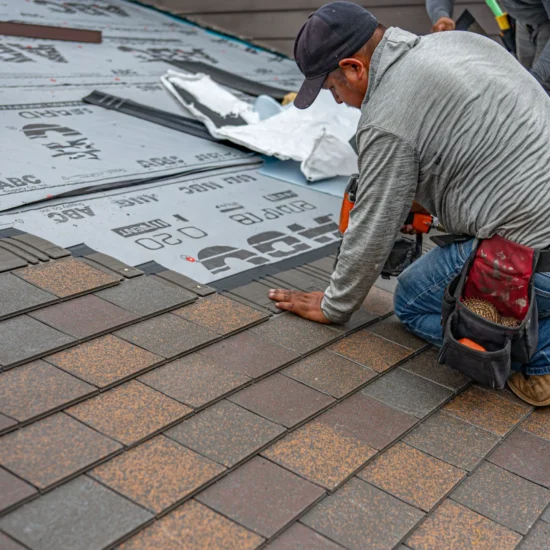
Every condominium owner owns far more than four walls and a deed. They also own a fractional interest in every roof, elevator, parking garage, window system, plumbing riser, façade, retaining wall, pool, mechanical plant, and fire protection system. Those assets have finite lives. Every day, they consume a little more of their remaining service life.
The Association’s reserve study is thought of by most people as a funding plan. Rarely is the reserve study referred to by its true name: depreciation report – at least not in the United States.
The reality is that a reserve study is also a thirty-year forecast of future capital liability. It estimates the dollars required to restore the physical value that the community will consume over time.
Imagine purchasing a new condominium for $500,000. Twenty-five years later, it is worth $900,000. On paper, your equity appears to have grown by $400,000. Yet the same building may now face tens of millions of dollars in reserve spending obligations.
Your proportional share of those obligations may easily reach hundreds of thousands of dollars over the coming decades.
Suppose your share of the reserve spending liability is $150,000, and growing with each passing year?
Meanwhile, your Association has long since established a policy that leads to chronic underfunding of the replacement reserves. The current reserve study confirms this fact; now, signs from the Board room indicate that things will change. A new BOD has awoken from a 20-year slumber and has acknowledged in no uncertain terms that funding of the reserves will become a priority in the future.
Will this policy change force perceived market values to reflect the hidden economic reality that every owner’s equity is compromised by deferred maintenance and underfunded reserves?
- Market equity is the amount remaining after subtracting the mortgage from the market value.
- Economic equity also recognizes the owner’s share of future capital obligations.
Capital obligations are not optional. Whether they are funded through reserves, loans or special assessments, they will eventually be paid by owners – either current or future.
In that sense, every mature condominium carries an invisible mortgage. Unlike a bank loan, there is no fixed payment or maturity date. Instead, it appears gradually through reserve assessments, insurance premiums, construction inflation, special assessments and deferred maintenance.
The effect becomes almost invisible after twenty to thirty years. Multiple building systems begin reaching the end of their useful lives at roughly the same time. Somewhere between year twenty and thirty years, the spending dynamics go from “kick the can down the road one more time,” to GAME ONE!
Deferring major replacements because the Association doesn’t have the money to pay for them only compounds the problem.
Communities that spent years keeping assessments artificially low suddenly discover there is no inexpensive way to replace decades of “consumed” infrastructure.
This is why deferred maintenance is so dangerous. It does not eliminate the liability. It merely converts today’s capital consumption into tomorrow’s reduction in the owner’s true equity.
The reserve study documents the obligation; it does not create the problem.
Here at the HOA Detective™ hotline, I often find myself telling disgruntled callers that their condo may have been sold as a “maintenance-free” housing option, but it is not free maintenance.
Someone is responsible for the maintenance on your behalf. Condominiums only centralize those responsibilities, but they do not eliminate them. The building quietly depreciates, consuming equity with each passing day, whether owners acknowledge it or not.
It would be incorrect to state that in Privatopia, condominium owners can’t build equity; many do, but it is an illusion to believe that 100% of the appreciation will accrue to the owner. The building itself is an equal participant in the transaction, demanding reinvestment to preserve the value everyone is depending on when they sell.
The question for buyers is not simply, ‘How much will this condominium appreciate?’
The question for buyers in the 21st century should be, ‘How much equity am I going to lose if the long-term reserve spending obligation is taken into account when I sell?’
Because You’re Buying More than a Home!