A roundup of HOA malfeasance, incompetence, and life-threatening governance.
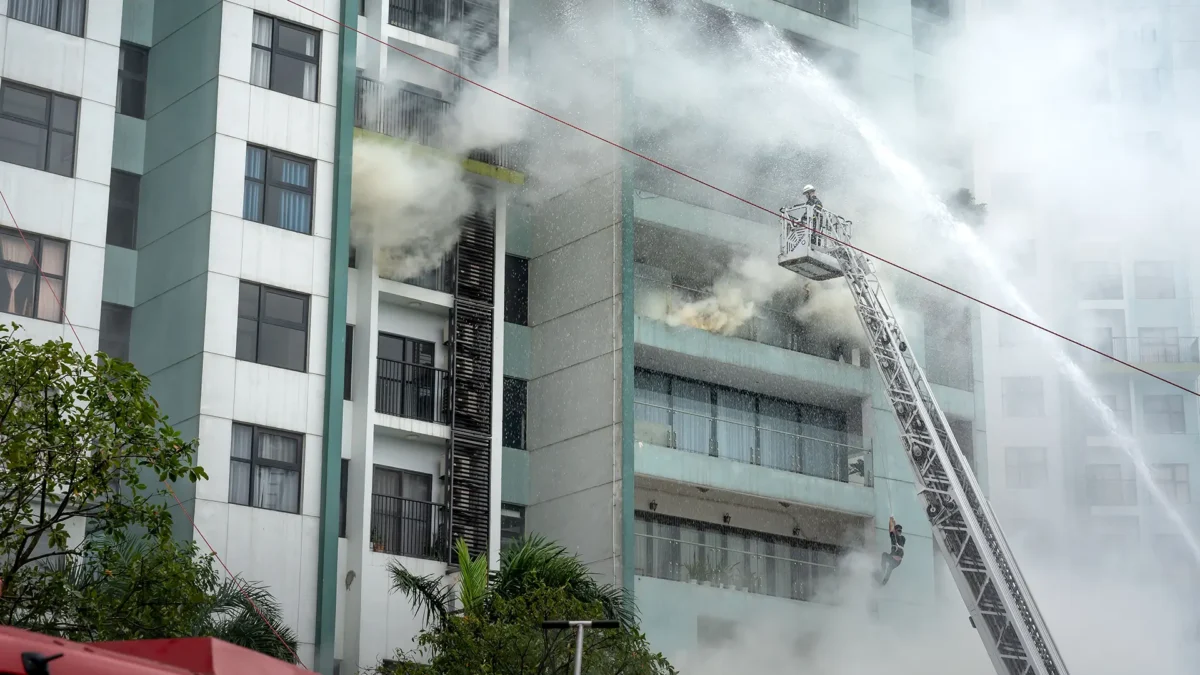
HOA Detective™ | August 7, 2026: The continent is burning, cities are baking, and wildfire smoke has turned summer vacation air into a public-health warning for millions across the U.S. and Canada. One might imagine that this would concentrate the minds of homeowner association and condominium boards on emergency readiness, insurance, HVAC maintenance, and the preservation of human life. If so, you would be mistaken.
Sorry About the Fire. Your Bill Is Due in 34 Days: One of the most grotesque cases in recent memory comes from La Viña, a gated Altadena, CA community damaged by the January 2025 Eaton Fire. Fifty-two of its 272 homes were reportedly destroyed. The HOA later imposed a $23,614 special assessment on owners to address roughly $6.4 million in damage to shared irrigation, fencing, and landscaping.
The payment window was reportedly 34 days, with 12 percent annual interest and lien consequences waiting behind it. By March 2026, the Association was suing at least one owner over the unpaid assessment and seeking foreclosure against a lot where the house had burned down in the January 2025 fire. ¹
Sure, a HOA may genuinely need money after a catastrophic fire that destroys 20% of the homes in the community, but necessity does not excuse the timing, structure, or enforcement posture. A board confronting disaster should begin with insurance transparency, phased funding alternatives, hardship accommodations, grants, loans, and a documented recovery plan.
Moving from ashes to lien enforcement in one administrative leap is not resilience. It is institutional panic weaponized against the membership.
Cooling Is Now Infrastructure, Not a Decorating Choice: In Nanaimo, British Columbia, a top-floor condominium reportedly became nearly unlivable as summer approached. The owners tried portable air conditioners, fans, and even aluminum foil on the windows. The proposed heat-pump solution then ran into costly strata requirements. The public reporting did not establish every technical fact or the strata’s full response, so this is not a verdict on one installation, but it is an example of a much larger governance failure in community associations across the Pacific Northwest that still treat efficient cooling as an elective alteration rather than a critical adaptation to a changing climate. ²
A June analysis by the Sightline Institute found that association barriers can include long approvals, aesthetic restrictions, supermajority votes, and outright bans. ³
48-story Toronto Condominium is warming up: In June 2026, one Toronto high-rise condominium reported that central air conditioning had been out of service for almost a month as the heat wave approached, without a repair timeline city staff began investigating. ⁴ Whether the cause is red tape or mechanical neglect, the result is the same: a residential high-rise in which the owners cannot remain safely inside their homes as temperatures continue to rise as summer approaches.
Boards have legitimate concerns about building envelopes, electrical capacity, drainage, noise, appearance, and liability. Their obligation is to convert those concerns into a standard, technically defensible approval pathway, not a procedural swamp in which the HOA Board meets every 30 days if the hapless owners are lucky.
If a building cannot provide reliable central cooling, it must have a realistic policy for owner-installed alternatives. ‘No’ is not a climate-adaptation plan.
A $155,000 Campaign to Evict One Heir: Climate was not required for the summer’s most concentrated display of HOA absurdity. In Jacksonville, Florida, a 28-year-old woman inherited her late father’s home in a 55-plus community after moving in to care for him. The HOA maintains that her occupancy violates the age covenant. Rather than find a proportionate resolution, the board approved a $155,000 legal assessment – about $1,000 for each of approximately 155 owners – to finance the dispute. The heir, as an owner, must reportedly pay the assessment, helping to fund the case against her. ⁵
The legal merits remain for the court. The governance merits are already visible. A Board of Directors is spending the collective treasury to pursue one resident while imposing the cost on retirees, many presumably living on fixed incomes. This is the peculiar genius of HOA litigation: transform a question that might have been mediated into a corporate crusade, then compel every neighbor – including the target – to finance the litigation.
Meanwhile, Nobody Opened the Bank Statements: In Cypress, Texas, a former HOA general manager was charged in May with stealing $53,631 between April 2024 and September 2025. Investigators alleged personal spending through Amazon, DoorDash, Cash App, a cellphone account, and even a home energy bill. The discovery reportedly began when a successor found a binder of unopened bank statements behind a desk. ⁶
That detail deserves to be framed. Sophisticated fraud controls are useful, but this alleged scheme apparently survived because the most primitive control – someone independent opening and reviewing the monthly statements – was missing from the procedures manual. No board should delegate custody, accounting, reconciliation, and statement review to the same person or management chain.
Reserve balances should be confirmed directly with financial institutions. Material disbursements should require dual authorization. Bank statements should go simultaneously to designated directors. Independent audits or reviews should test transactions, not merely decorate the annual records package.
The Common Thread: These stories may look different on the surface – a wildfire assessment, a blocked heat pump, broken central cooling, an age-restriction lawsuit, and alleged credit-card theft. In reality, they are variations on the same defect:
Common-interest housing schemes concentrate authority over money, infrastructure, and daily life inside small private governments that often lack professional competence, meaningful owner participation, and effective regulatory oversight.
Conclusion: Extreme weather is stripping away the friction layer between HOA authority figures and the membership at large. HOA governance is no longer about lawns, paint colors, and pool rules. In a disaster, the Association controls evacuation routes, defensible space, insurance claims, common utilities, emergency communications, rebuilding money, and sometimes whether residents can cool their own homes. Those are life-safety and solvency functions.
The climate is changing faster than the HOA governing culture. A Board that still prioritizes uniform façades over heat survival, lien machinery over post-fire recovery, litigation pride over practicality, or managerial convenience over financial controls is not only annoying, it is a risk factor that multiplies the cost of ownership. Climate change did not create HOA dysfunction. It is simply making the consequences impossible to ignore.
Notes | Sources
1. Renee Straker, “California Wildfire Victims Face $23,000 HOA Bill,” The Weather Channel, March 26, 2026, https://weather.com/news/news/2026-03-26-eaton-wildfire-victims-in-la-vina-face-hefty-hoa-bill ; “Altadena Homeowners Association Sues Resident Post-Fire,” The Real Deal, March 27, 2026, https://therealdeal.com/la/2026/03/27/altadena-homeowners-association-sues-resident-post-fire/.
2. CTV News, “Heat Pump Installation Presents Challenges for Condo Owners,” May 22, 2026, https://www.youtube.com/watch?v=6MM6WeLKojk.
3. Michael Andersen, “Homeowner Associations Are Standing in the Way of Heat Pumps,” Sightline Institute, June 18, 2026, https://www.sightline.org/2026/06/18/homeowner-associations-are-standing-in-the-way-of-heat-pumps/.
4. CBC News Toronto, “City Investigates as Condo AC Shuts Down Ahead of Toronto Heat Wave,” July 2026, https://www.youtube.com/watch?v=a-pn_TeTp0M.
5. News4JAX, “Influencer Fights HOA Lawsuit over Inherited Home in Jacksonville 55-Plus Community as Neighbors Face $155K Assessment,” July 14, 2026, https://www.news4jax.com/news/local/2026/07/14/influencer-fights-hoa-lawsuit-over-inherited-home-in-jacksonville-55-plus-community-as-neighbors-face-155k-assessment/.
6. Julie Gerstein, “HOA General Manager Is Charged With Stealing $53K for DoorDash and Amazon Purchases,” Realtor.com, May 8, 2026, https://www.realtor.com/news/real-estate-news/hoa-cypress-texas-fraud-shiesha-sparrow/.