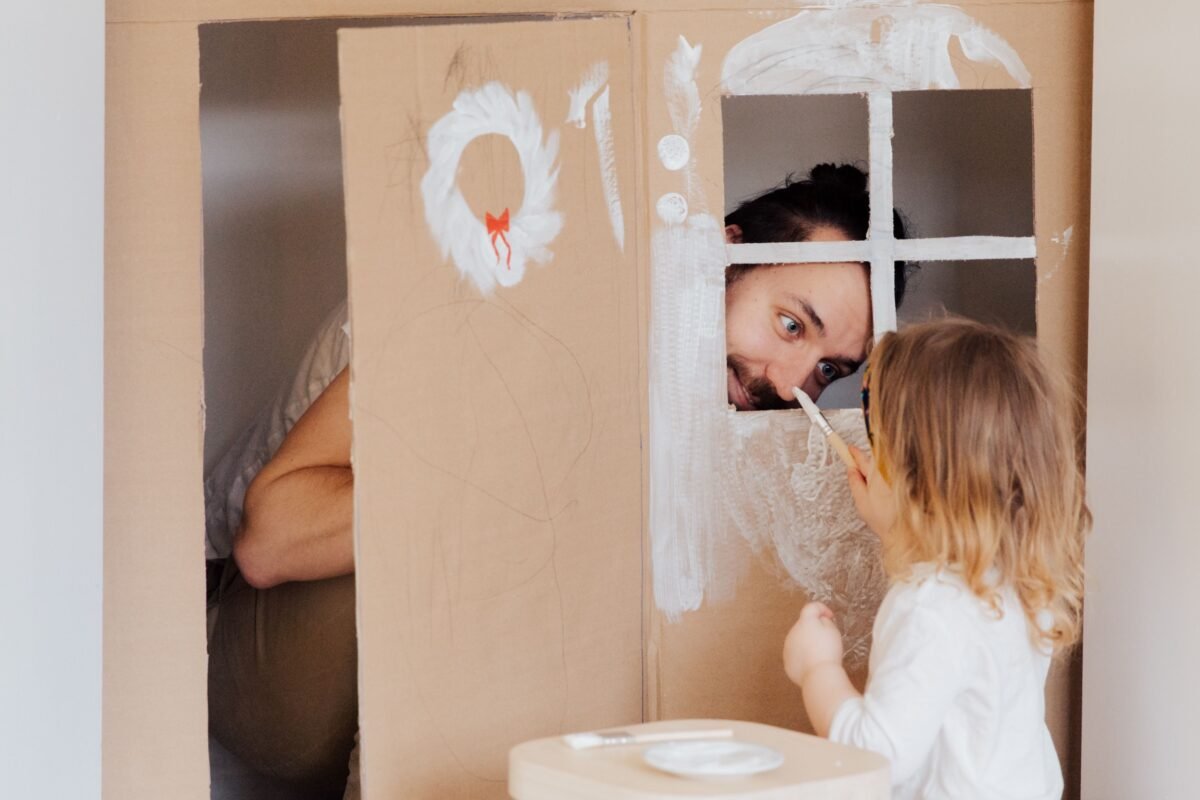
“Playing house was a harmless childhood pastime in the 1960s.”
HOA Detective™ | June 12, 2026: In the interest of full disclosure, the HOA Detective™ grew up in the 1960s when gender-bias was still ingrained in the national psyche. Little boys played baseball, little girls played house.
When a group of girls would get together to play house, it typically involved putting on their mother’s oversized kitchen apron and mimicking the behavior of the elder female in the house as dear mother went about her daily routine.
For years, the Detective and his colleagues have used the phrase “Playing House Syndrome” to describe a recurring phenomenon found throughout the common interest housing ecosystem. Play Housing Syndrome occurs when a homeowner association spends decades avoiding difficult financial decisions while simultaneously pretending that the inevitable consequences of homeownership somehow doesn’t apply to them. Inch the can down the road, or kick it down, it doesn’t matter. The end result is always the same.
True Cost of Ownership: At its core, Playing House Syndrome is the collective decision to live in a property that the ownership group cannot actually afford. That statement sounds harsh. It is not intended as an insult. It is intended as a financial observation. Every building and every real estate investment has a true cost of ownership.
- Roofs wear out.
- Elevators age.
- Plumbing systems deteriorate.
- Waterproofing assemblies fail.
- Mechanical equipment reaches the end of its useful life.
- Roads, swimming pools, and utility lines wear out.
The bill always arrives eventually. The only question is whether owners choose to prepare for it or, as a group, they choose to Play House by pretending the laws of maintenance and physical depreciation do not apply to them.
Those HOAs that choose to play house are simply ignoring the reality of what it actually costs to own a home. Unfortunately, this describes the many associations that spend years, even decades, constructing elaborate justifications for why preparation can be delayed another year. Then another. And another. Until reality finally forces itself into the conversation.
Summer Vacation or a Reserve Contribution: Imagine a household that never saves for future expenses. The family knows the roof will eventually need replacement. They know the furnace is approaching the end of its life. They know the driveway is cracking and the exterior paint is failing. Yet every year they decide not to save.
Instead, they play house for 20 years, and take the kids to Disneyland every year instead of saving for a new roof.
Most financial advisors would immediately recognize this behavior as reckless. Yet within the HOA world, this same practice is often normalized.
- Reserve contributions are artificially low.
- Maintenance projects are deferred.
- Major repairs are postponed.
- Reserve studies are treated as an inconvenience or a suggestion, rather than a serious financial planning document.
- Special assessments are delayed until they become unavoidable.
- All of a sudden, the summer vacation to Disneyland ended.
At this point, some early-generation owners simply pack up and leave the wreckage behind.
The Financial Inertia of Groups: A mathematical principle, the Detective calls Financial Inertia of Groups, makes this behavior possible. What many boards celebrate as affordability is often the transfer of today’s costs into future liabilities.
The financial inertia of large ownership groups allows the illusion of affordability to persist for years, even decades, as deferred maintenance spending is systematically transformed into debt, special assessments, and borrowing obligations for future owners.
This kick the can down the road, and continue to play house behavior is possible because the collective financial leverage of a group of owners is typically more powerful than the individuals within the group. You can see a similar principle in motion with government entities that can never seem to balance their budget but continue to operate year after year. Many HOAs are the same way.
Once the situation becomes unbearable, there is always the friendly banker down the block, ready and willing to approve a loan to bail out the HOA.
The Problem isn’t Ignorance: Most board members understand that the building requires maintenance. Most managers understand that reserves are inadequate. Most reserve professionals understand that contribution levels are insufficient.
The real problem is political.
Nobody wants to be the person who proposes a substantial increase in assessments. Nobody wants to be blamed for a special assessment. The easiest path is postponement. Raise dues a little. Delay a project. Borrow from reserves. Refinance a loan. Adjust assumptions. Hope somebody else deals with it later.
Chronic Signs – Underfunded Reserves: One of the most common symptoms of Playing House syndrome is chronic reserve underfunding. The reserve account exists for a simple purpose: to collect money before the expense occurs. Yet many associations operate as though reserves are optional.
Some maintain reserve balances so low that virtually every significant project requires borrowing. Others save for a few years, and once the Association has accumulated 5-10% of the projected spending, based on a poorly prepared reserve study, they call it good.
As The Oracle of Engineering would have said, when it comes to the math of reserve funding, “It’s all relevant.”
Rob Peter to Pay: Others routinely try to maneuver a way around the need for increasing the assessments by transferring money between operating and reserve accounts. My late mother-in-law, Mildred, called this: “Robbing Peter to Pay Paul.”
Fleeing the Scene: Still others take out loans to pay for work that should have been funded through decades of reserve contributions, some of which should have come from past owners who have long-since been seen “fleeing the scene.”
The language varies, but economic reality does not:
- Every dollar not saved today becomes a larger dollar that must be collected tomorrow.
- Compound inflation guarantees it.
- Deferred maintenance guarantees it.
- Aging infrastructure guarantees it.
The consequences become especially severe when the behavior persists for generations. At that point, the problem is no longer simply a board issue. It becomes a governance culture.
Entire generations of owners become accustomed to the idea that financial reality can always be postponed one more year. New owners inherit the same assumptions. New boards repeat the same mistakes. New managers inherit the same structural deficiencies.
The Mathematics of Avoidance: There is an old saying often attributed to Albert Einstein that describes compound interest as the Eighth Wonder of the World. Whether Einstein actually said it is debatable, but the underlying principle is undeniable:
Small decisions, repeated consistently over long periods of time, produce enormous consequences.
The same principle applies to condominium governance, except that deferred maintenance turns the mathematics of compound interest upside down.
Compound interest rewards those who save and invest. Deferred maintenance punishes those who postpone and avoid. Every year a necessary repair is delayed, and inflation continues to compound. Building systems continue to age. Minor defects become major defects. Water finds new pathways. Materials continue their relentless march toward failure. What appears to be a cost avoided is often nothing more than a larger cost quietly accumulating in the future.
In this sense, deferred maintenance is negative compound interest imposed by the laws of physics. The association that refuses to fund reserves today is not escaping the obligation. It is simply allowing time, inflation, deterioration, and interest expense to magnify the eventual bill.
The Ultimate Fallacy in Playing House: The owners convince themselves they are making housing more affordable when, in reality, they are making future ownership dramatically more expensive. The temporary comfort of low assessments is purchased with the certainty of higher costs later.
Paying the Piper: Physics is even less forgiving than mathematics. A lender may negotiate. A contractor may offer payment terms. But roofs do not negotiate. Elevators do not negotiate. Plumbing systems do not negotiate. Buildings never forget what is owed to them.
Reality always arrives in the form an invoice from The Piper. When it does, the outstanding balance is inevitably larger than what anyone could have imagined during all the years the Association was playing house.
Because You’re Buying More than a Home!